
Halloween
What eerie secrets connect buried bones, tragic deaths, restless ghosts, and the legends that have haunted the Royal Mint for centuries?
The Royal Mint is over 1,100 years old and has been situated in three different locations across its lifespan. Join us in following the Mint’s journey from its early beginnings in London, to its first home at the Tower of London, and on to Little Tower Hill. Join our presenters in exploring the hidden stories across the history of the Mint, and find out how, when, and even why the Royal Mint moved from London all the way to its current location in Llantrisant, South Wales.
Tower Of London
The Royal Mint was installed in the Tower of London in c. 1279, during the reign of Edward I. It would remain there for over 500 years, producing the coinage of a growing nation and a burgeoning empire. For most of this period, coins were struck by hand using tools like a pile a trussel, a set of dies onto which the coinage designs were engraved directly. Sheet metal was hammered and cut by hand and finished pieces each carefully weighed.
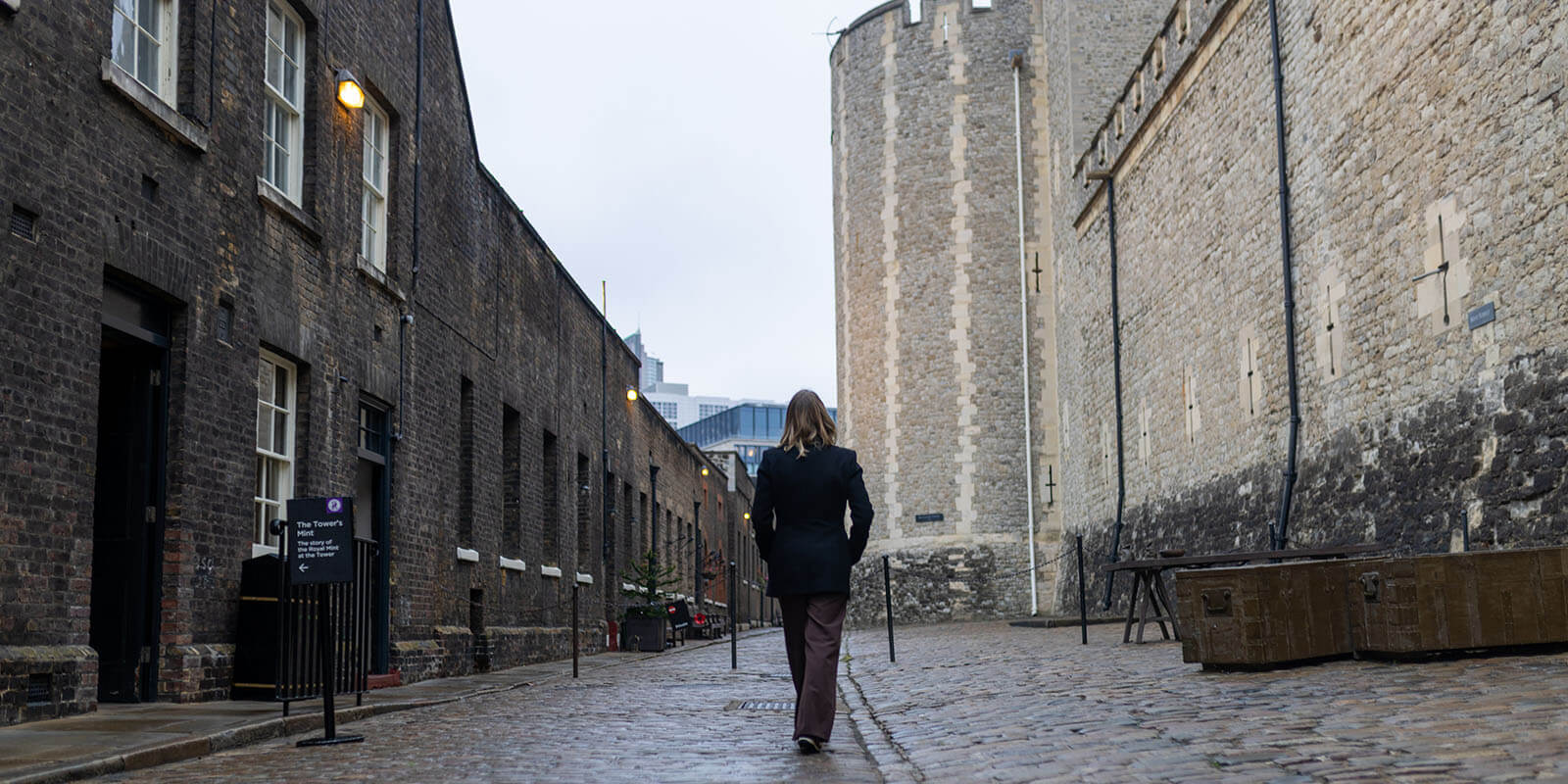
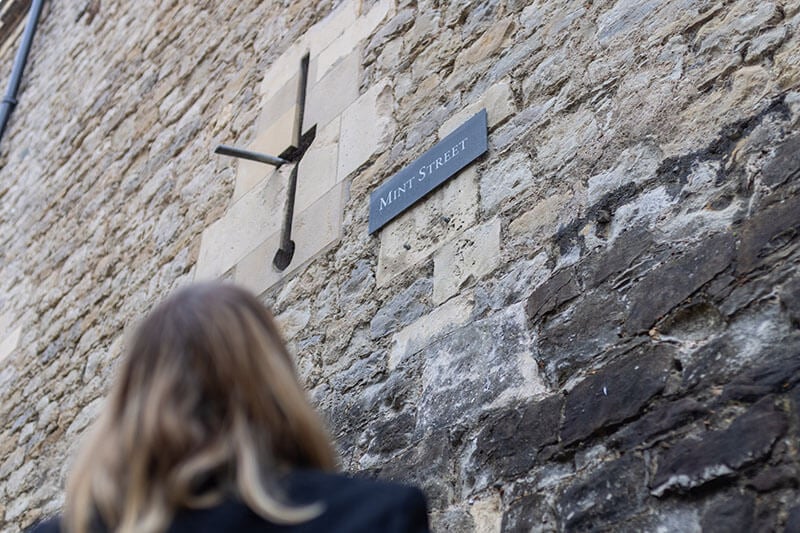
Mint Street at the Tower of London
Making money was a physically tough job, and the minting buildings in the tower would have been cramped and unpleasant, even more so in the seventeenth century with the introduction of horse-powered technology such as mechanical blanking and rolling presses. The Stuart Restoration, and the reign of Charles II, saw the Mint move towards these kinds of mechanically advanced production methods, significantly increasing both the output and quality of the coinage. Mechanically struck coins could be thicker and more uniform, owing to advances in blank-cutting technology, and much more detailed and uniform with a mechanical, higher tonnage strike.
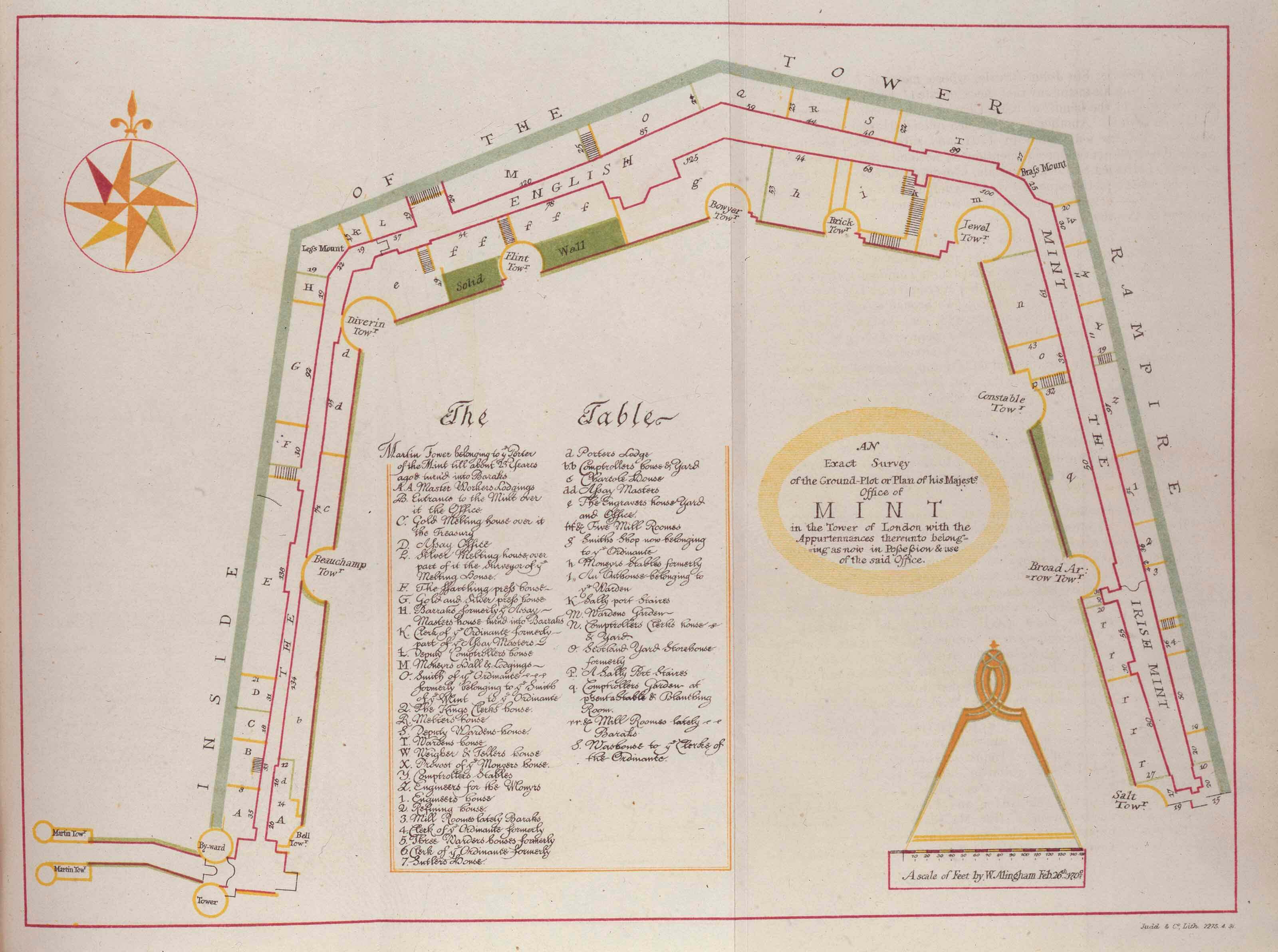
William Alingham's plan of the Mint at the Tower of London in 1701
Tower Hill
As space became a pressing issue in the Tower of London, the Royal Mint sought new premises at the start of the nineteenth century. A new, purpose-built site was completed in 1809, situated on Little Tower Hill and overlooking the Mint’s former home at the Tower of London. The striking of coins commenced there in 1810, and the Mint would remain there for over 150 years, during some of its most intense periods of industrialisation.
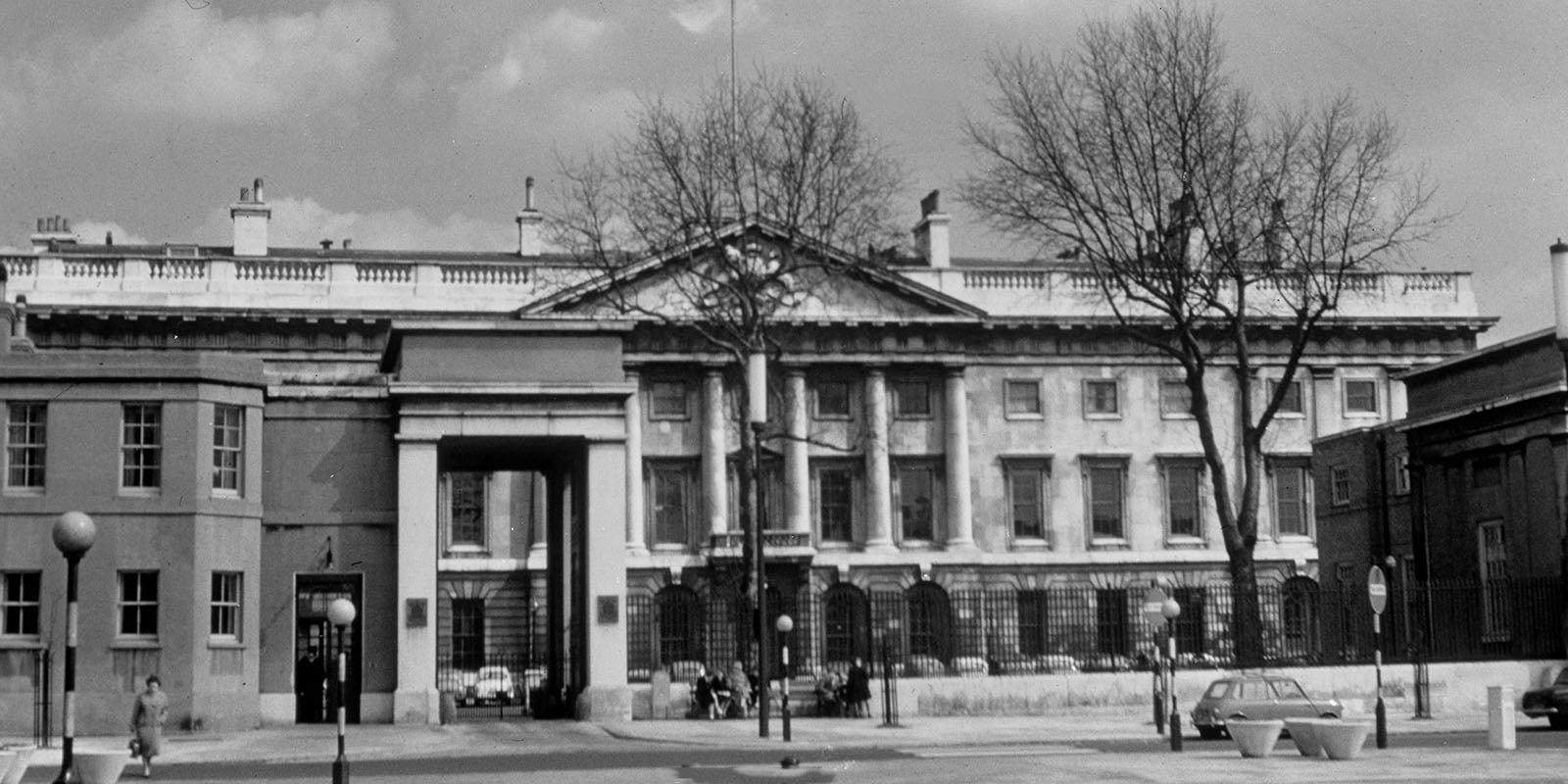
The Royal Mint at Tower Hill
The Tower Hill site was designed for the advent of steam technology and was built as the Mint acquired Matthew Boulton’s new and more effective steam-powered coining presses. Alongside the classically inspired frontage of the administration building, the site featured around four acres of logically organised factory space, ready to accommodate the scale of machinery with which the Mint could now work. The output of the Mint expanded significantly during the nineteenth and twentieth centuries, at the Tower Hill site, owing both to the production of a British Imperial coinage for Britain’s territories around the world, and later to the acceptance of overseas orders for other nations.
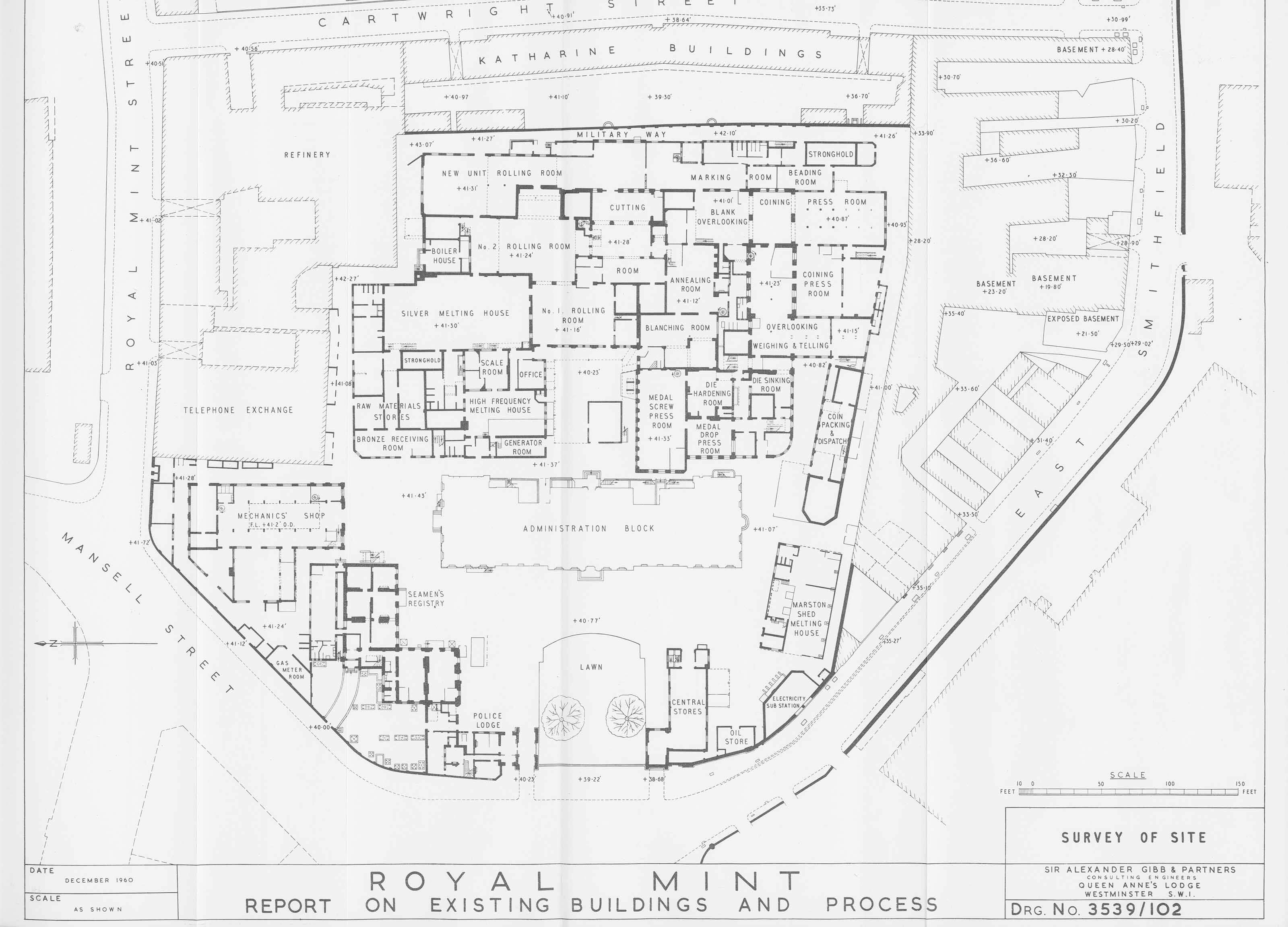
Plan of Tower Hill mid 1900s
Llantrisant
It was the announcement in 1966 that Britain would adopt a new decimal currency that prompted the Royal Mint to move out of London after a millennium of minting there. By the 1960s, the Tower Hill site had become cramped and inefficient, and rebuilding had been under consideration for some time already. The Mint had expanded beyond the borders of Britain, undertaking work for across the British Empire as well as a lot of highly profitable export work for other nations. Expansion was not possible at Tower Hill, and a new location was sought outside of London.
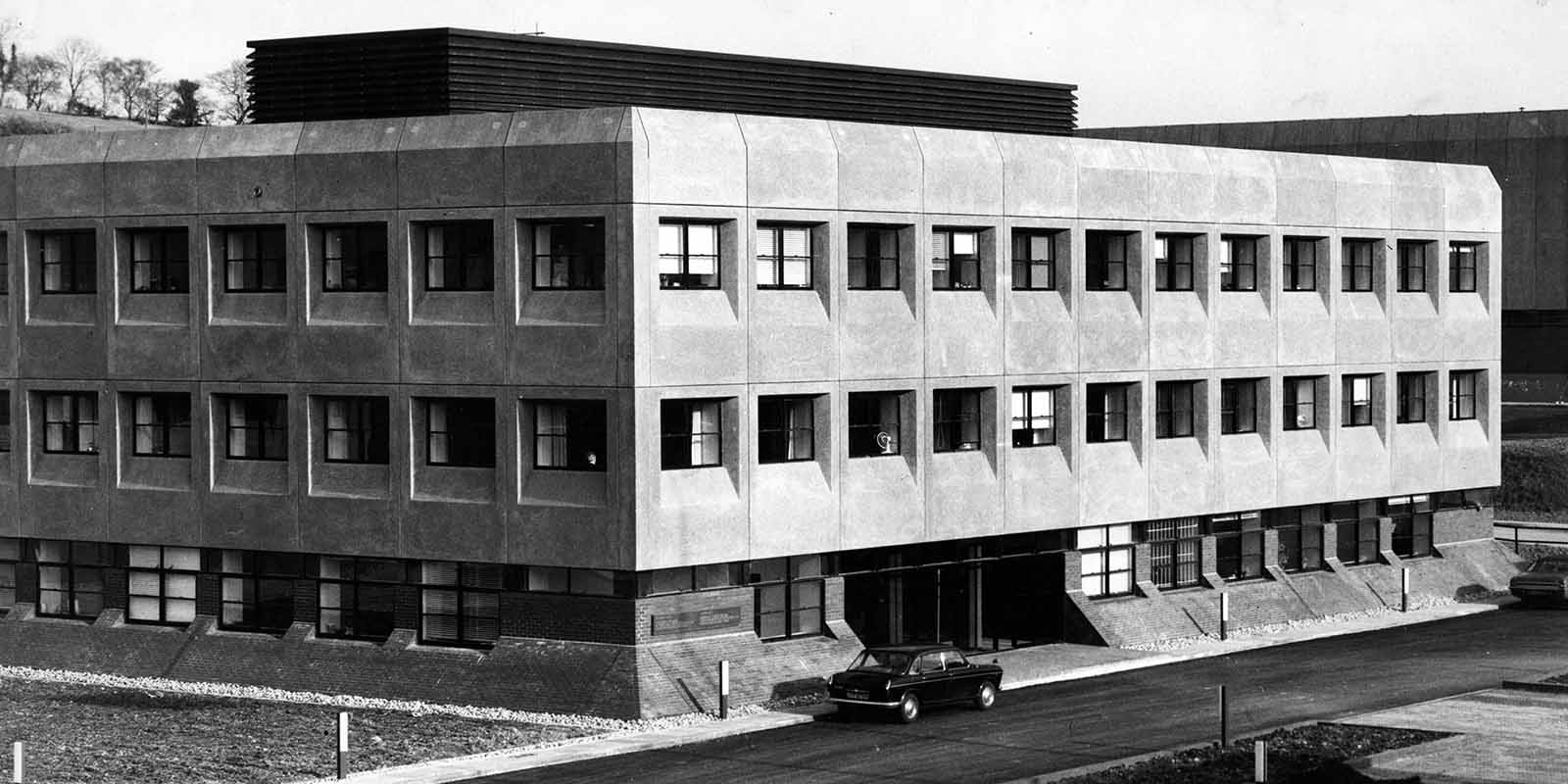
One of the early buildings at the Royal Mint Decimal Branch in llantrisant, South Wales
From the 20 locations considered Llantrisant was decided in 1967, aided in no small part by James Callaghan, the then Chancellor of the Exchequer and – by virtue of that title – the Master of the Mint. As the Member of Parliament for Cardiff, he freely admitted that he didn’t care which valley the new Mint was located in, as long as it was a Welsh one. The Royal Mint at Llantrisant was opened in December 1968, in time for Decimalisation Day on 15 February 1971, and has been the home of the Royal Mint ever since.
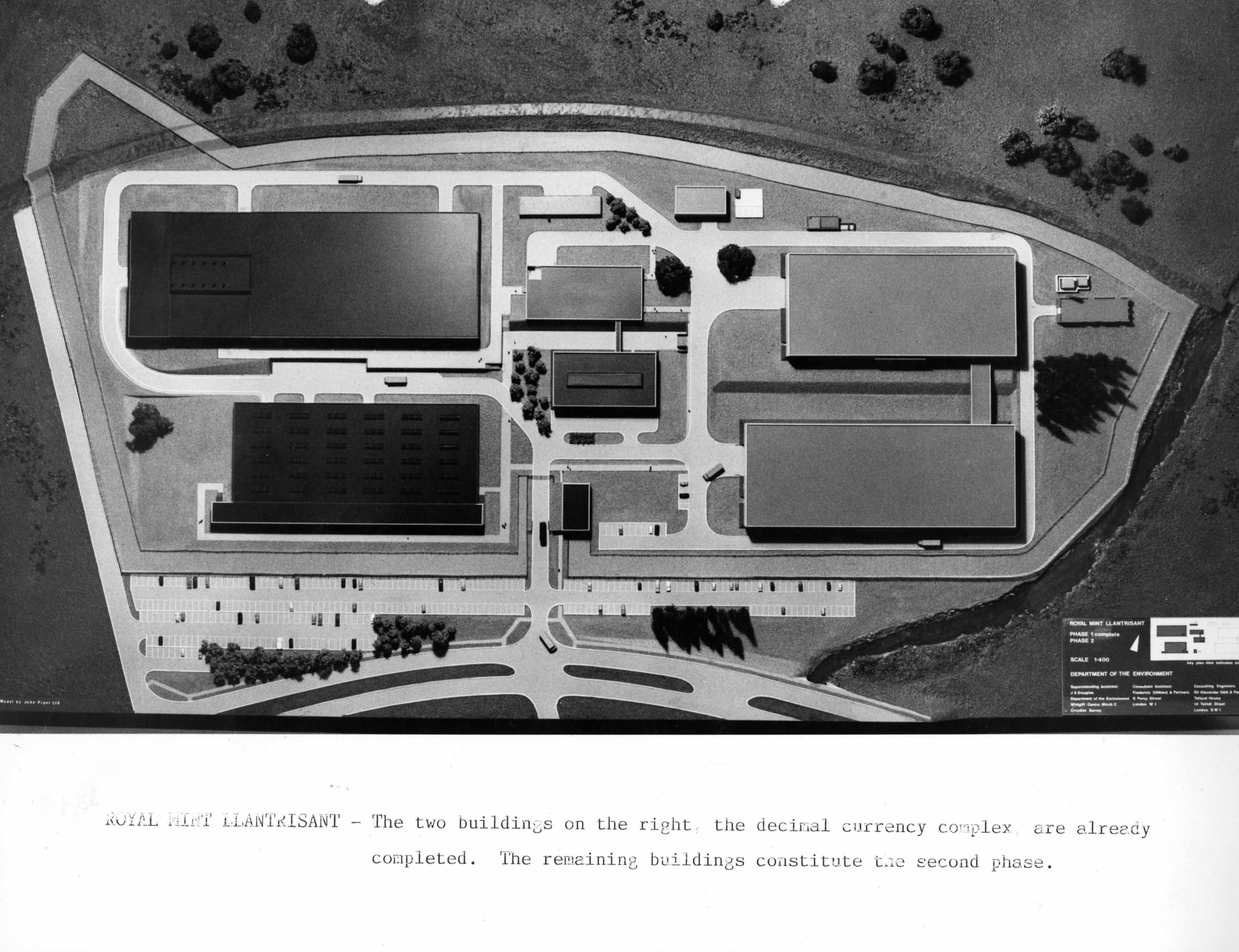
Architects plan for the second phase of development in the 1970s at the Royal Mint site in Llantrisant, South Wales
What eerie secrets connect buried bones, tragic deaths, restless ghosts, and the legends that have haunted the Royal Mint for centuries?
How does one of the most remarkable metal detecting finds in recent history shed light on the story being told in the Bayeux Tapestry today?
Episode 6
Coins have long been used for entertainment. Join us as we explore vintage penny machines and speak with a magician about the enduring allure of coin illusions.