
The Mint in the Tower
7 minute read
In this article….
The Mint’s First Home | More than a Mint | Hand-Striking and Hard Work | Silver Pennies
Summary
For over five hundred years, the Royal Mint was situated within the walls of the Tower of London, as part of the secure royal fortress at the heart of a growing nation. Minting in medieval times was difficult and often dangerous work, which remained the same in process for much of the Mint’s time in the Tower. Situated between the inner and outer walls, the Mint found in the Tower of London a home that was secure, well-guarded, and convenient for the receipt of bullion and distribution of coins.
The Mint’s First Home
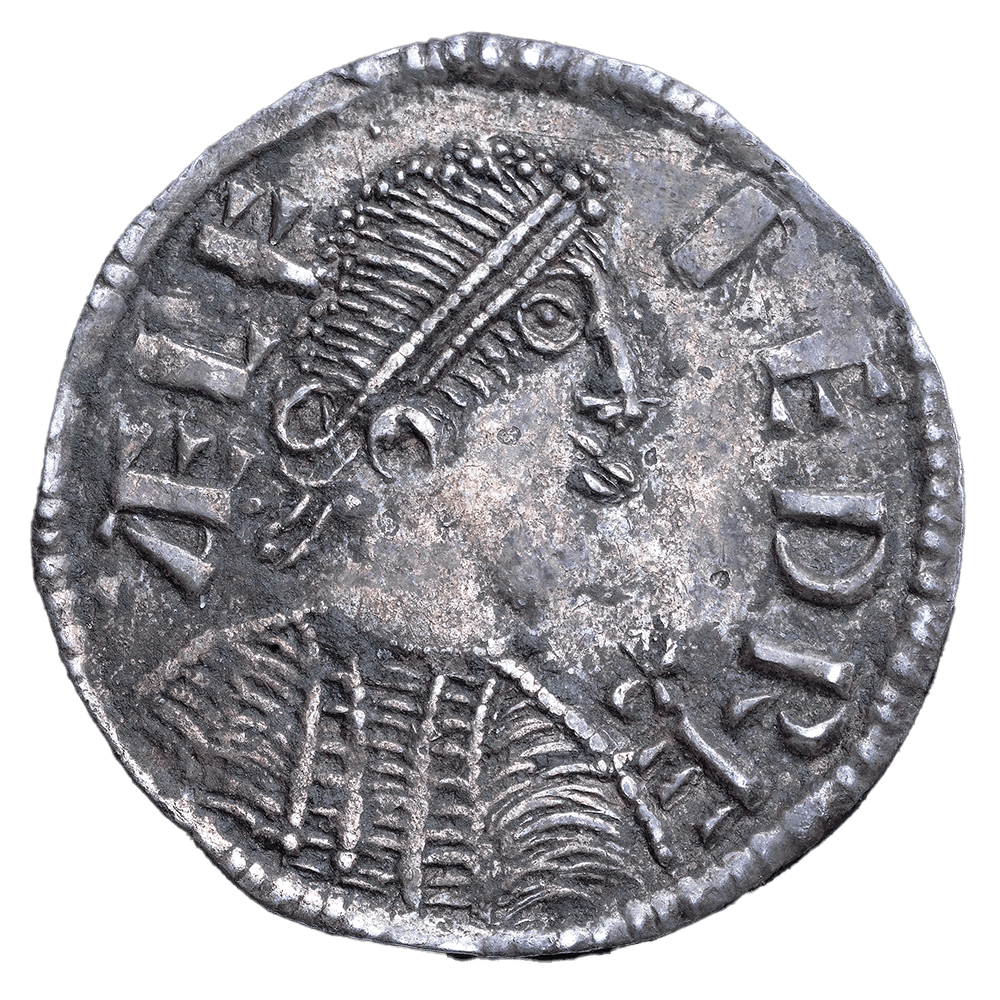
By 1279, Edward had I granted the Mint a permanent home within the walls of the Tower of London, marking a significant moment in what had been an ongoing process of centralisation. Early Anglo-Saxon minting had taken place all over the British Isles, with the coins produced often marked with the location of their minting and even the identity of the moneyer who struck them. We may well know the names of more eleventh-century moneyers than of most other lay professions. But from the reign of Henry II (1154-1189), minting began to centralise in the Southeast, predominantly in London or Canterbury. The Royal Mint dates its symbolic starting point from a silver penny of Alfred the Great, from the 880s, which indicates minting was taking place in London, but it would not be until several hundred years later that London became the true home of the Mint.
The Tower of London provided an ideal location for a mint, which in the medieval period would have struck purely in the precious metals of silver and gold. The inherent security from being within a working royal fortress kept bullion protected and lent a further measure of trustworthiness to the coinage. At the centre of growing London, and situated on the Thames, it was also a handy location for transporting bullion and distributing the struck coins around the country.
More than a Mint
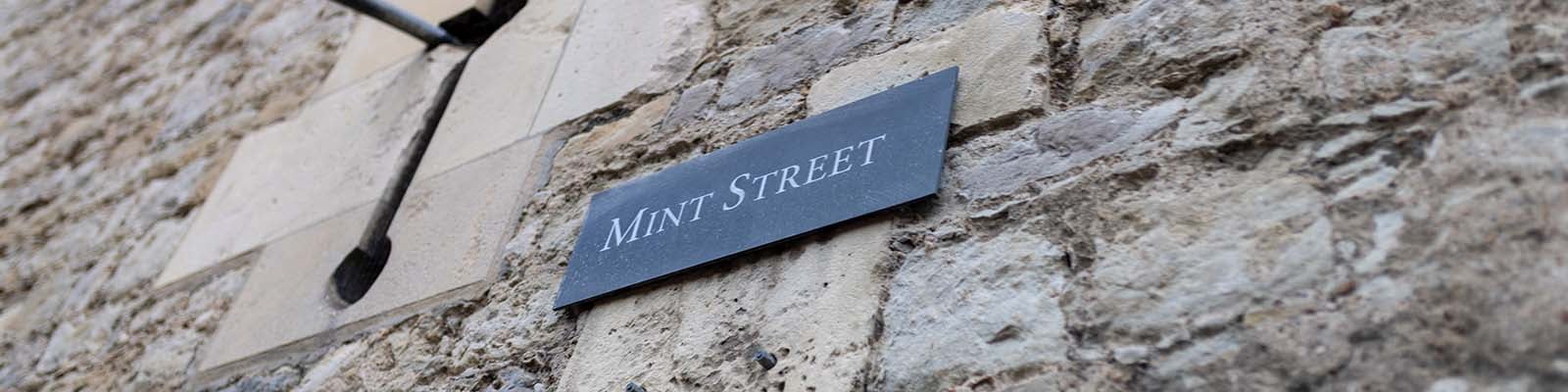
As a working royal fortress, the Tower of London was home to far more than a mint. It housed a permanent garrison, was a well-guarded prison, and even had a zoo at one point. Even so, the striking of coins demanded an extra layer of security, and moneyers were often kept separate from the regular goings on of the Tower. The Mint operated from a series of workshop buildings situated in the Outer Ward of the Tower, between the inner and outer walls, on what became known as Mint Street. It is still known as such to this day, and some of the original minting buildings still stand, housing within them a Royal Mint Museum exhibition.
The many functions of the Tower led to inevitable conflict and compromise throughout the five hundred years of the Mint’s presence. Space within the walls came at a premium, and sporadic minting rather than the constant striking of today led to arguments over reclaiming what sometimes seemed like unoccupied minting buildings. It was the case at many points throughout the Mint’s time at the Tower that conflict arose between the garrison and the Mint over who had better claim to a space. As a royal palace, the Tower also played host to members of the royal court, and visitors to the Mint were a frequent occurrence. The sheer range of work undertaken would undoubtedly have had an impact on the minting process.
Hand-Striking and Hard Work
From the Mint’s establishment in the Tower, every coin struck there was produced by hand until the introduction of machine technology in the 1660s. The process was labour-intensive, often involving dangerous chemicals, and it took place in the cramped conditions of the minting buildings and amidst the sounds and smells of a working royal fortress. The working conditions of the moneyers were less than ideal, but the coins they produced were of an incredibly high standard. It was not uncommon for moneyers to lose fingers, or to fall ill from some of the chemical processes used in coining.
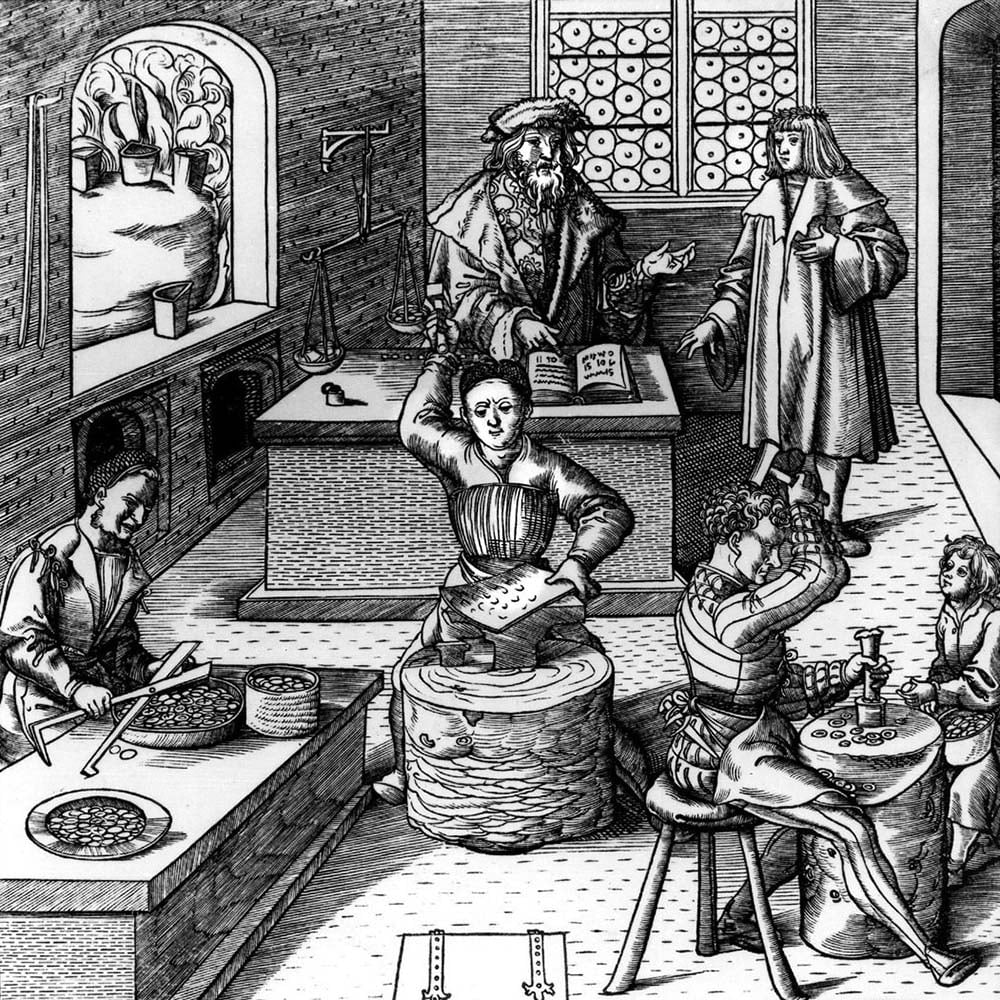
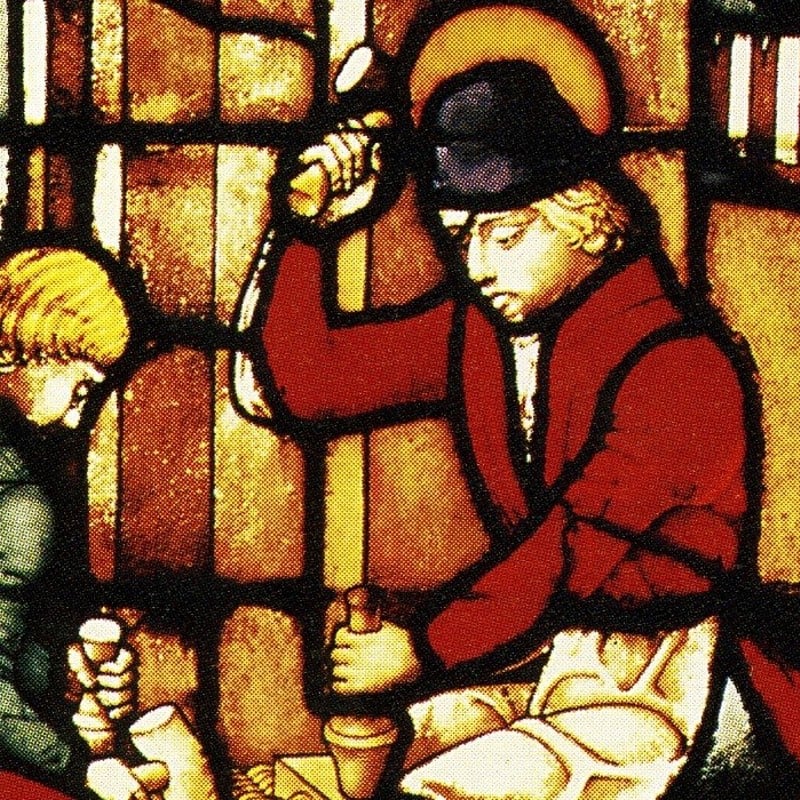
Working by hand, an individual would need to beat a sheet of precious metal to the correct thickness for coining and then cut from it with shears the circular blanks to be turned into coins. The coins themselves were struck by hammer blow between a pair of engraved dies, called a pile and trussel, using the harder ferrous metal to impact a design directly into the softer silver or gold. Once coins were struck, they were weighed against sets of weights and measures to ensure they were of the exact standard they should be. Medieval coins were struck exclusively in precious metal, and the value of the coins was inherently tied to their precious metal content. Coins were checked carefully, not only during the production process but via an official one too. The Trial of the Pyx, which is a judicial ceremony dating back to at least the 12th century, was established as a means of placing on trial the coinage and its maker, with severe penalties for failure. The Trial persists to this day, annually, with both a ceremonial and legal function.
Silver Pennies
Medieval minting used precious metals exclusively, and the value of a coin was inherently tied to its gold or silver content. For the early medieval period, even through until the Battle of Hastings in 1066, the silver penny was virtually the only denomination in circulation. It wasn’t until around 1280 that smaller denominations, such as halfpennies, or larger ones, such as groats, were struck regularly for use. Even then, this small range of denominations was struck in silver alone until 1340, at which point the first regularly issued gold coin was introduced: the noble. This slow progression meant that for hundreds of years, the silver penny was the only denomination in use in England, and that this single coin had a surprisingly large purchasing power.
Even so, the lack of smaller denominations in the Middle Ages did cause some issues for people trying to conduct small transactions of under a penny in value. Seeking smaller coins, some people would cut the silver penny into halves or quarters to give a fraction of a penny in change. Though the Mint did not condone or encourage this cutting, its commitment to accuracy in the coinage did assure people that half of a silver penny would contain exactly half a penny’s worth of silver, if it was cut accurately. Moreover, one of the most common images on the reverse of the penny from the reign of William the Conqueror was a cross, which filled most of the field of the coin. Quite unintentionally, this piece of religious iconography provided a useful guideline for those looking to divide the coin into two unofficial halfpennies.
You might also like
Making Money
The basic minting process of melting, casting, blanking and striking is essentially timeless.


Writings on the Wall
In 1912, electrotypes were created from graffiti carved into the Tower of London’s ancient walls.