
Maritime Imagery
Episode 1
Whether in warships or life saving, Britain’s naval heritage has had a lasting impact on its currency for centuries. In this episode, explore the story of British naval history through coins of the past.
How can one of the most important metal detecting finds of recent history help us understand the story being told in the Bayeux Tapestry? The year 1066 was a turbulent one for England. Three different kings sat on the throne and the Battle of Hastings changed the course of English history. As panic spread through the kingdom, we look in this episode at how people hid their coins from invaders, discovered years later as fantastic coin hoards containing thousands of silver pennies.
Listen to the episode here!: https://open.spotify.com/episode/26PKxJqPZ82Pft2TwZ2AEO?si=srQ1ufRuT8Gm_QnguQ42Kw
Precious Metal Pennies
The penny is the longstanding survivor of the British coinage system, having existed in some form since early medieval times. In the era of Harold and William the Conqueror, it was still more or less the only denomination in use in England, and so this single coin had a surprisingly large purchasing power. Even so, the lack of smaller denominations did cause issues for transactions of under a penny in value.
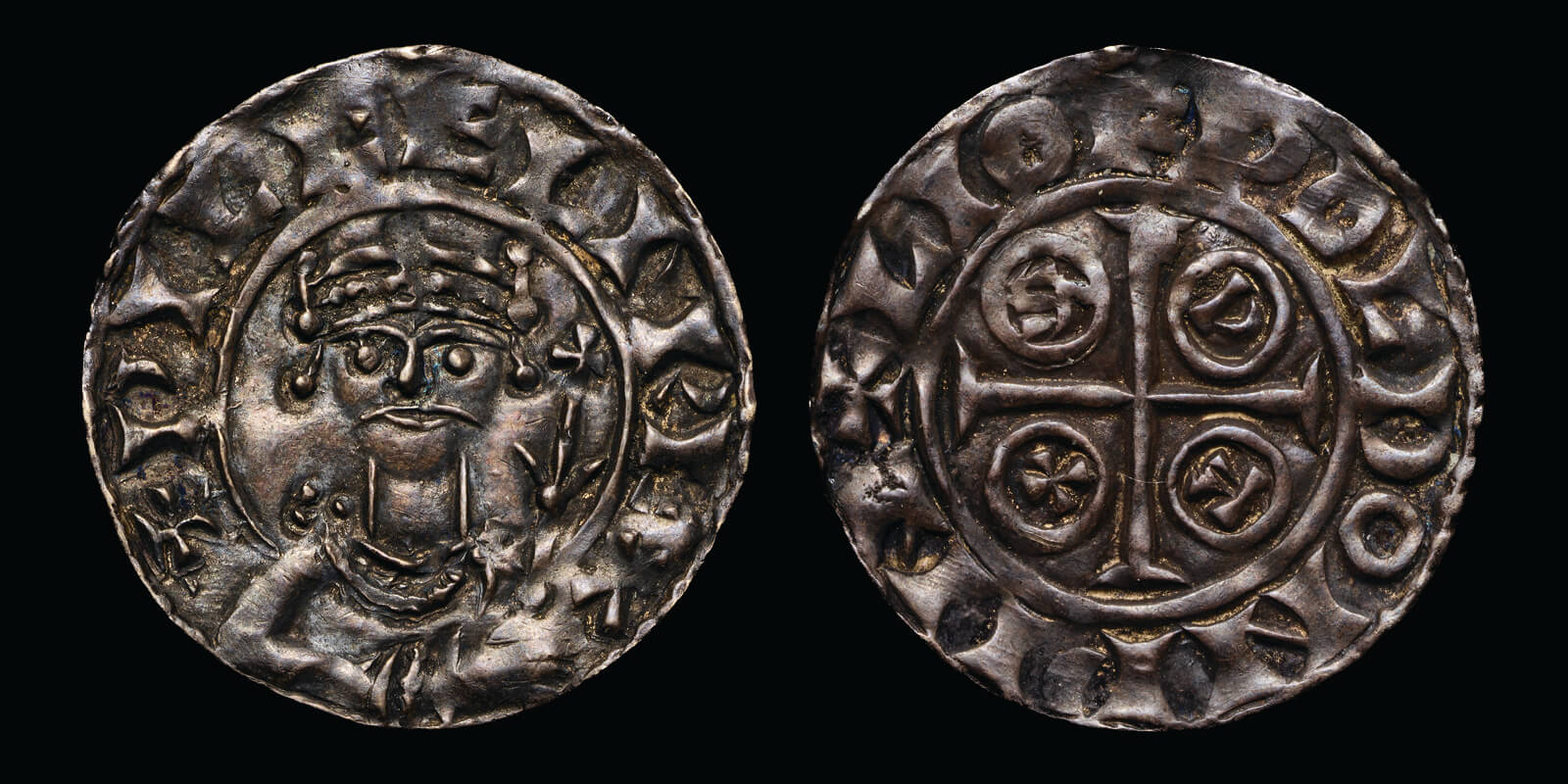
William I penny from the Royal Mint Museum collection
The silver penny’s value came directly from its weight in precious metal, containing exactly one penny’s worth of silver. Seeking smaller coins, some people would literally cut the coin into halves or quarters to give a fraction of a penny in change, confident that half of the coin would contain half a penny’s worth of silver, provided it was cut accurately.
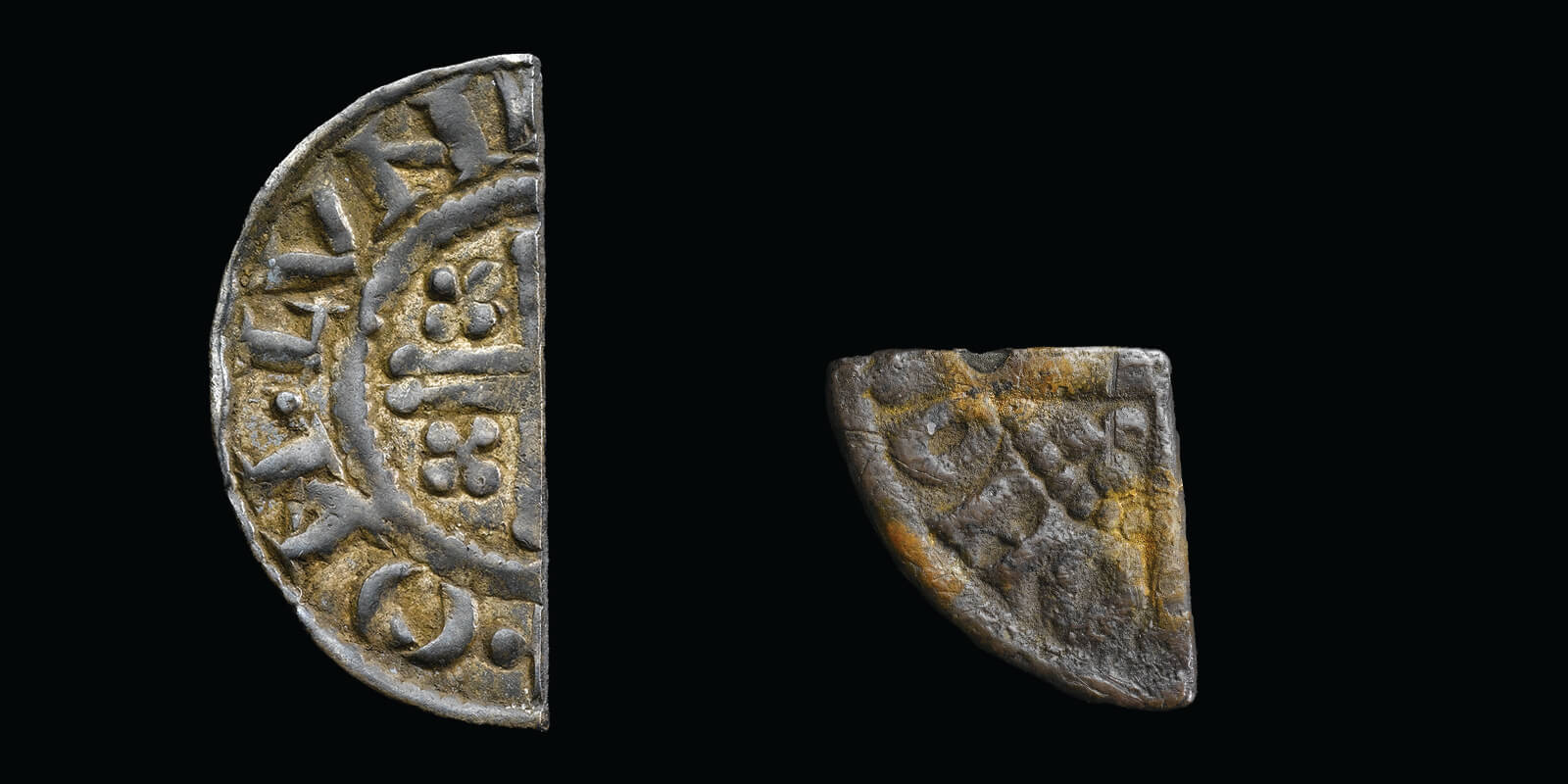
Cut half-penny and farthing from the Royal Mint Museum collection
One of the most common images on the reverse of the silver penny from the reign of William the Conqueror was a cross, which filled most of the field of the coin. Though quite unintentional, this piece of religious iconography served as quite a useful guideline for people looking to divide the silver penny into halfpennies or quarters!
When is a Hoard Not a Hoard?
The collection of silver pennies found as part of the Chew Valley hoard is one of the largest single collections of coins of William the Conqueror and Harold ever found. It’s not unusual for Medieval pennies to turn up in large numbers when they are discovered, because a wealthy person in a single denomination currency might have had a very large number of coins. But hoards are only hoards when we dig them up – when buried, these coins would have been better described as a fortune, or somebody’s savings.
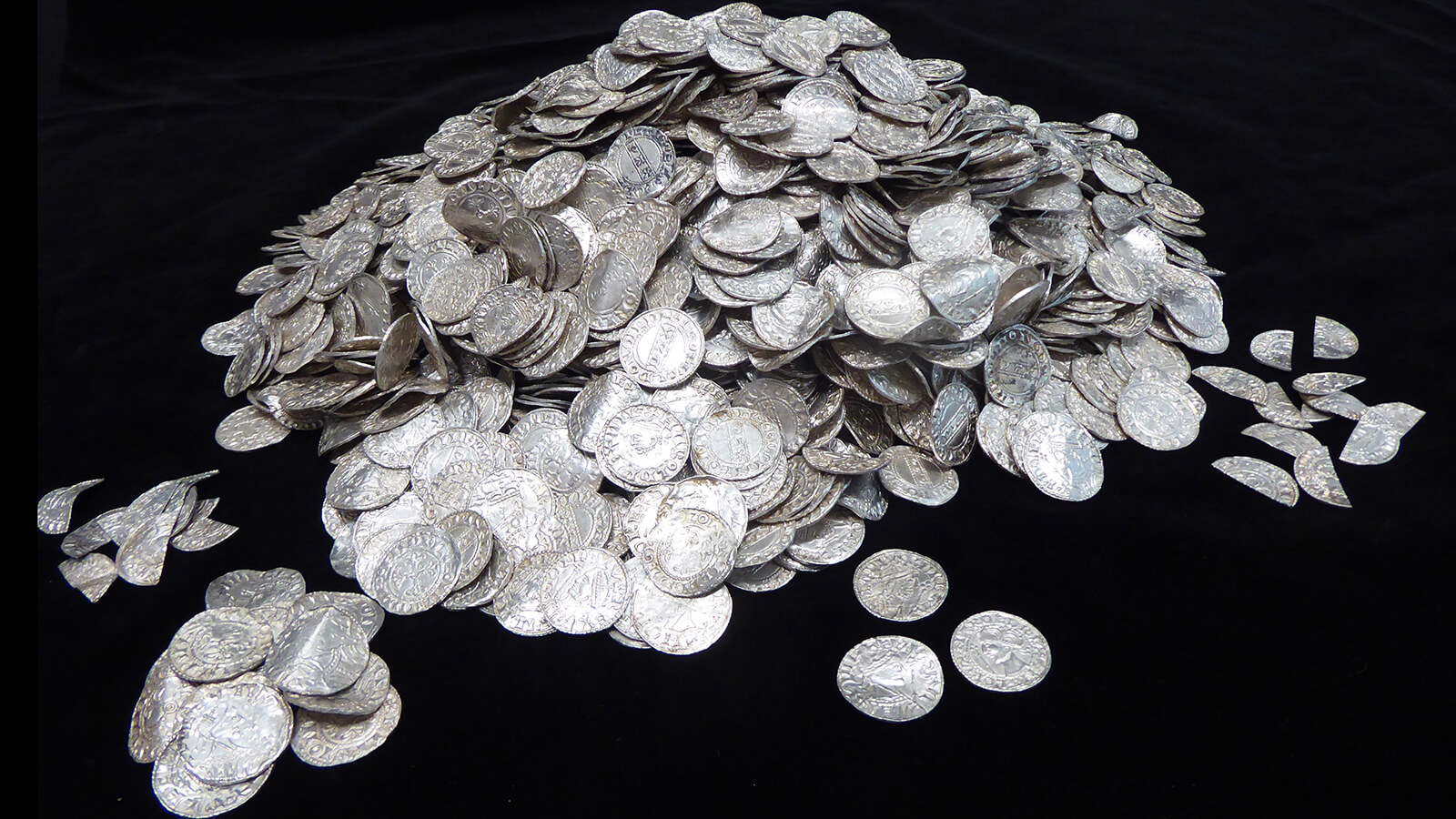
Chew Valley Hoard Conserved ©British Museum
Hoards like this one are often the result of people fearing for their lives and livelihoods in times of turmoil. Without access to modern banking, people sometimes chose to bury their wealth in times of trouble, hoping they might come back to claim it later. The Chew Valley Hoard dates from around 1066-1068, and we can surmise that it might well be the result of somebody who had to flee from war arriving on their doorstep. They might have buried a portion of their wealth here, or perhaps their entire life savings, leaving behind an incredible hoard that tells us a lot about when they lived.
One Hoard, Three Monarchs
The hoard of silver pennies found in the Chew Valley is unusual in that it contains coins from all three of the monarchs that ruled in the turbulent year of 1066 – Edward the Confessor, Harold II and William I (‘the Conqueror’). It wasn’t unusual for there to be lots of different types and varieties of a monarch’s coin in the Middle Ages, because coins were struck by hand at mints around the country, and the sheer scale of this hoard tells us a lot about how coins of the period were made and by whom.
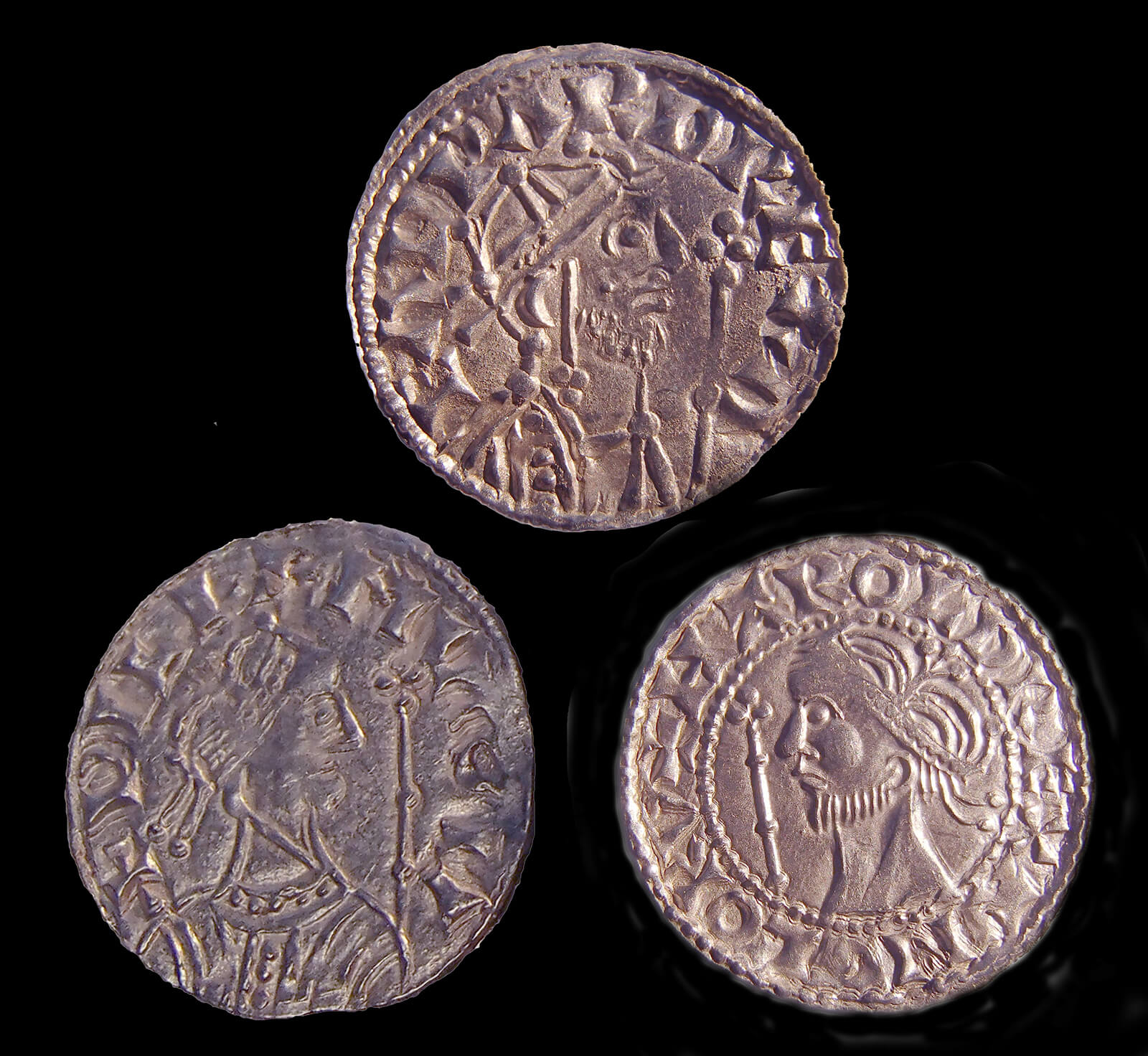
Chew Valley Hoard Issuers Edward (top), William I (left) Harold II (right) ©British Museum
There are around twice as many coins of Harold II in the Chew Valley hoard than had ever previously been found, and vastly more of some of the earlier types of coins of William I. This means that historians have been able to gain a much clearer picture of how William worked to situate himself as a new and legitimate monarch.
Peace In Our Time
The Chew Valley silver pennies also tell us about how Harold II and William I used their coinage as a tool of propaganda. Both monarchs, who were on opposite sides at the famous Battle of Hastings in 1066, have coins in this hoard bearing the inscription PAX, or ‘peace’! The era was anything but peaceful, but both monarchs sought to emphasise on the coins of their realm that only their rule could bring true peace and stability to the land.
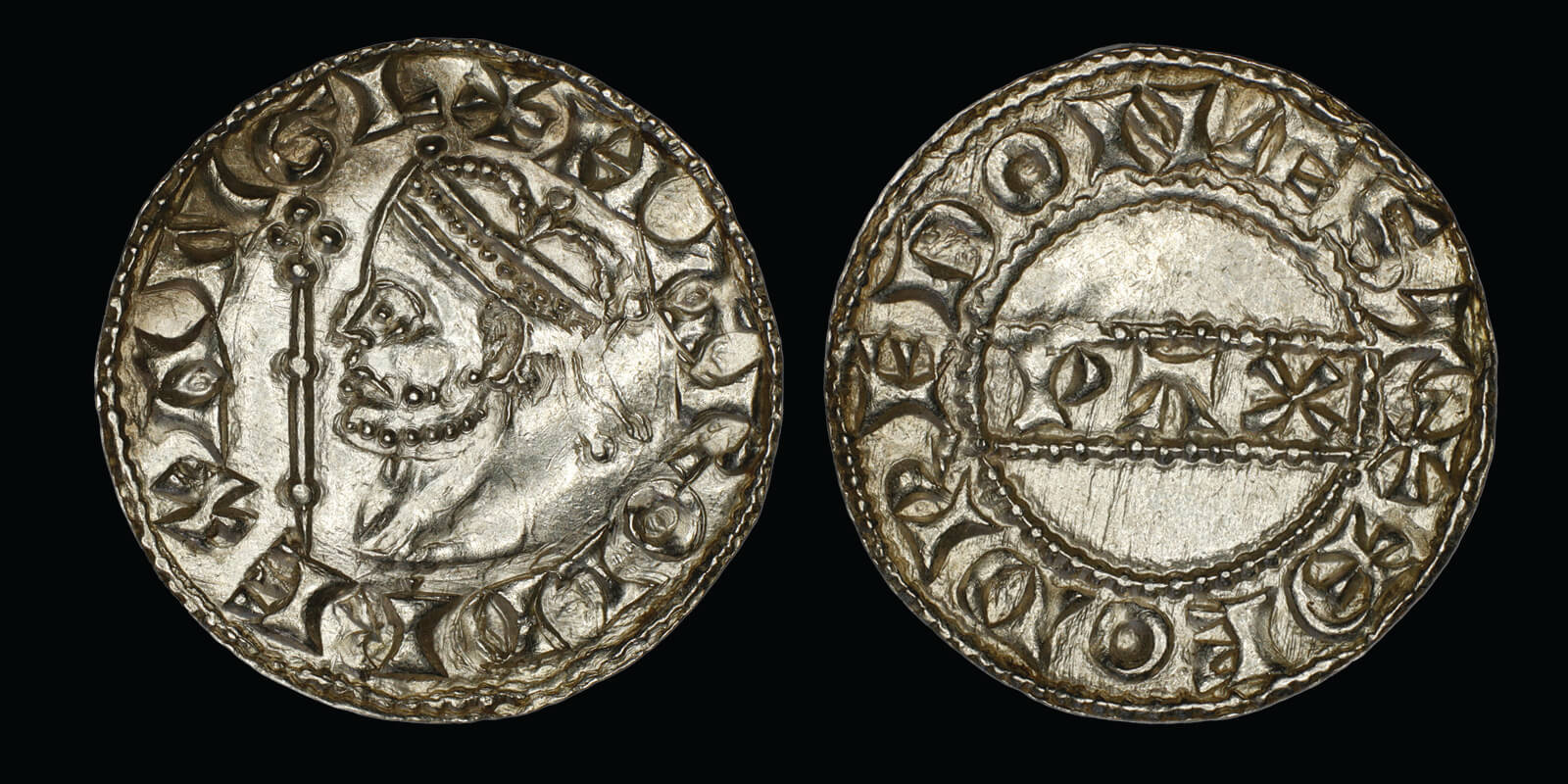
Chew Valley Hoard: Penny of Harold II, Theodred, Hastings ©British Museum
For many centuries following, English and British monarchs throughout history would go on to use representative images on their coins, and sometimes even treat the coins as propaganda items. Arguably, these PAX pennies are some of the earliest examples that might have been found in this country.
Britain's Bayeux Tapestry
The Bayeaux Tapestry is usually displayed in Bayeaux, France, though in 2026 and 2027 it resides in the British Museum where it is on display in this country for the first time since its creation! In the nineteenth century, though, a group of Victorian embroiderers thought it a terrible shame that Britain held no copy of its own and set about to rectify this.
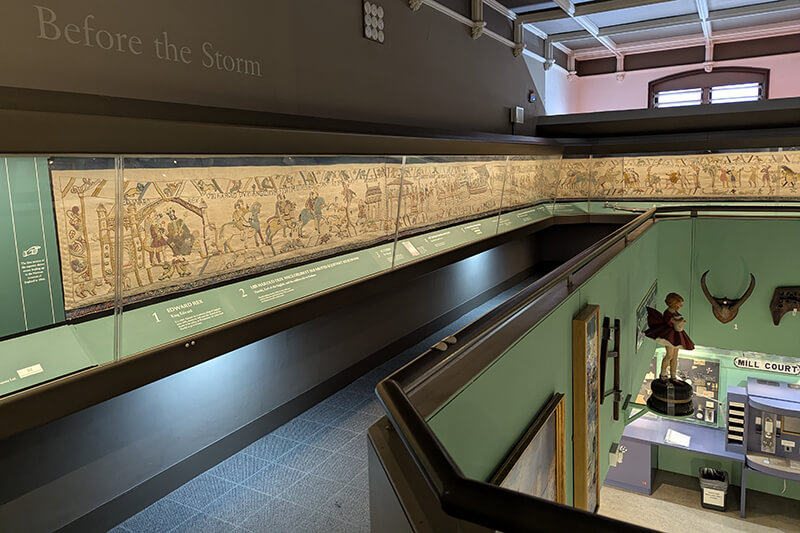
Their creation was a like-for-like replica of the tapestry, producing in the same colour and detail a contemporary replica that was given a permanent home in Reading from 1895. The work of over 35 women over the course of a full year, the tapestry is almost identical to the original barring a few changes for Victorian sensibilities. Several border figures who are entirely nude in the original have been instead given tasteful pants in the replica. You can visit Britain’s Bayeaux Tapestry on permanent display at Reading Museum.
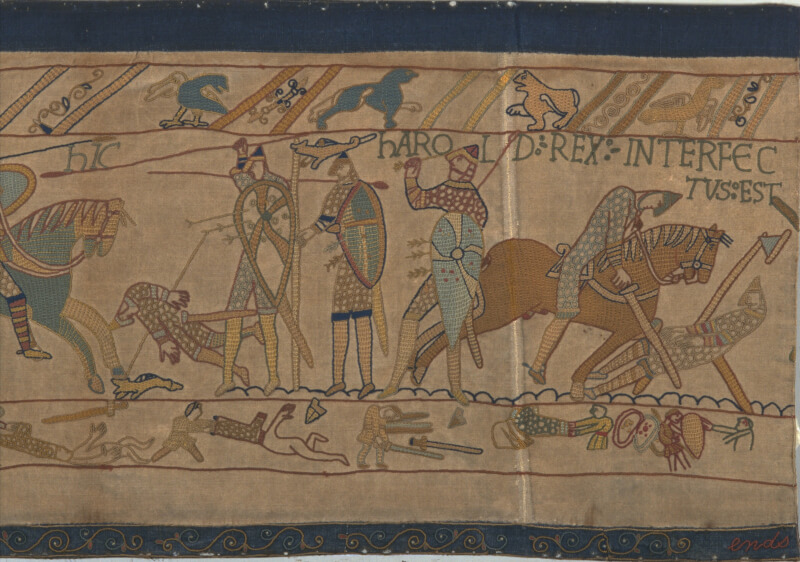
Britain's Bayeux Tapestry at Reading Museum. Scene 6: The death of Harold at the Battle of Hastings ©Reading Museum
Whilst the story of the Tapestry – both original and replica – is that of the conquest of William of Normandy and the Battle of Hastings, there is a great deal of additional information in the background and margins about what life was like for people in 1066. One particularly gruesome section shows the burning of a house, helpfully labelled in Latin as HIC DOMVS INCENTIVR (Here, a house burns), with women and children fleeing from the chaos. These are the sort of people who, fleeing the oncoming conquest, might well have ended up burying their coins in what we would now classify as a coin hoard.
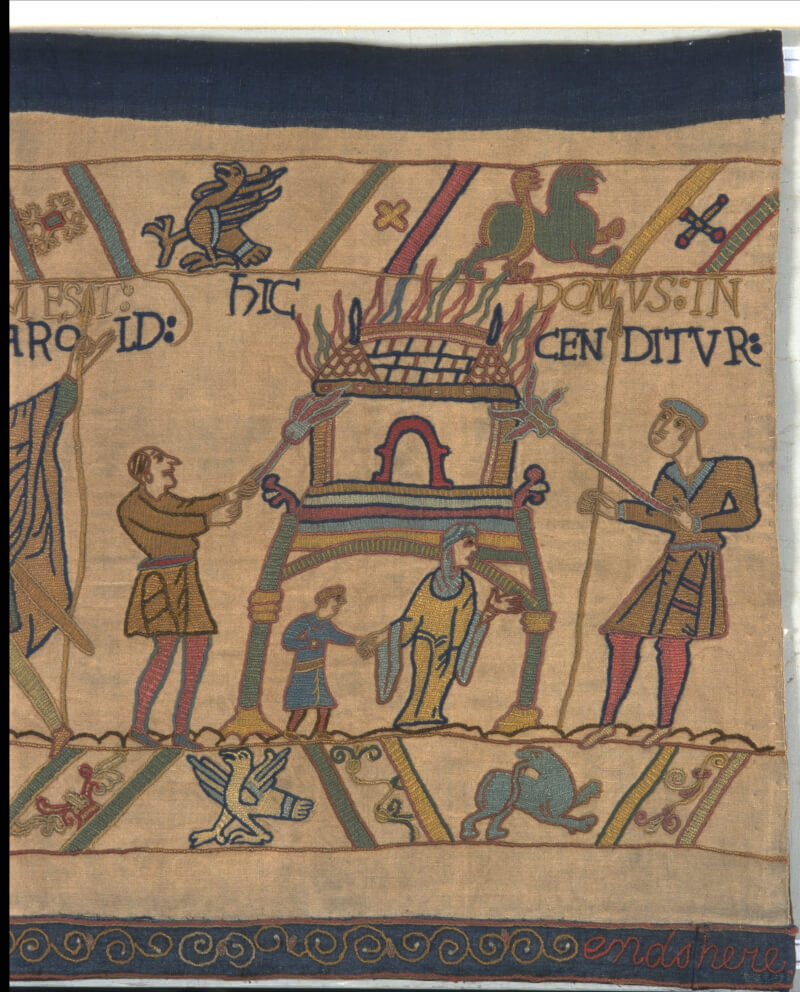
Britain's Bayeux Tapestry at Reading Museum. Scene 3: The beachhead scene ©Reading Museum
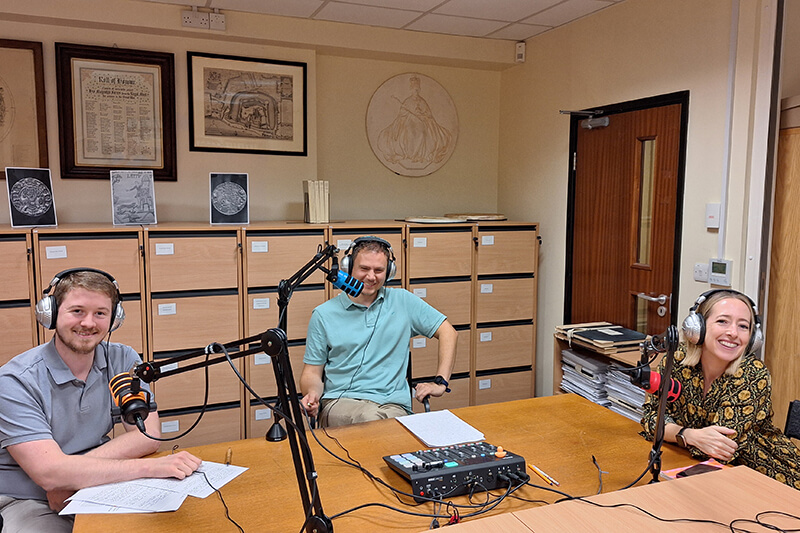
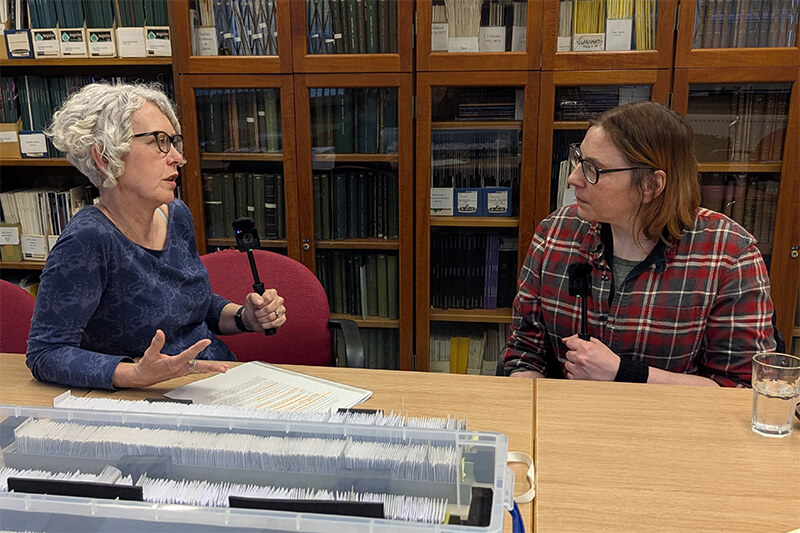
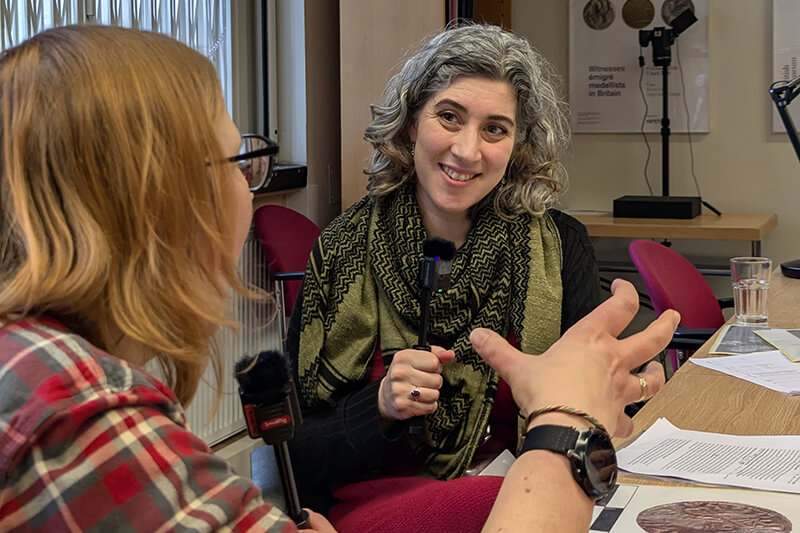
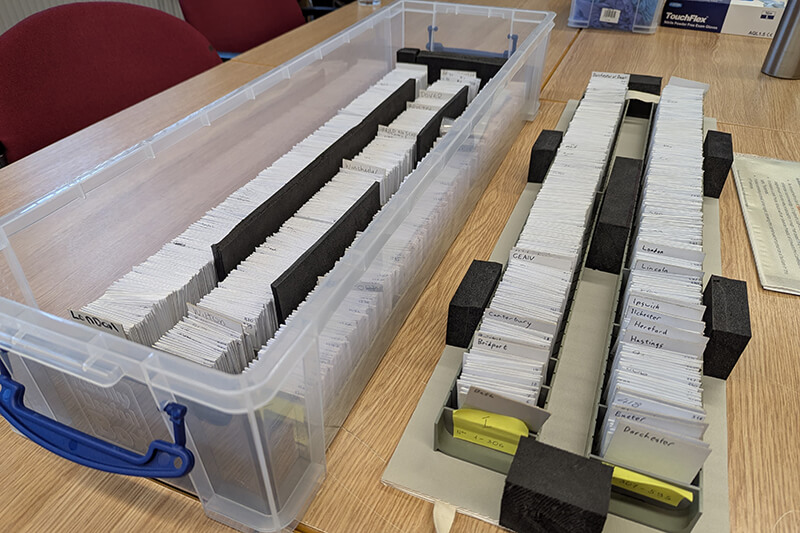
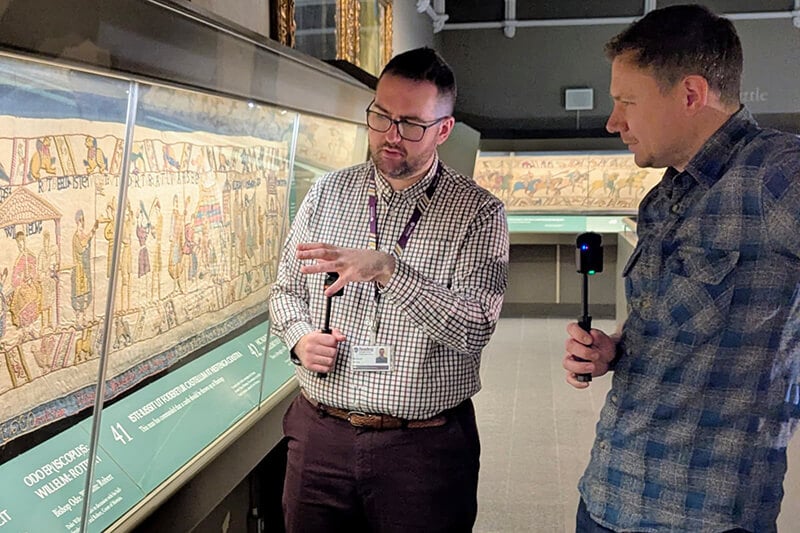
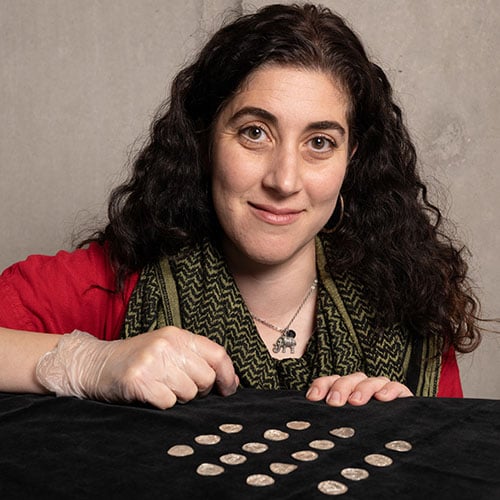
Amal Khreisheh
Amal Khreisheh is Senior Curator for the South West Heritage Trust with responsibility for the archaeology and natural science collections. She was part of the team who acquired the Chew Valley Hoard for the Somerset Council museum collection and is now the curatorial lead for the forthcoming temporary and permanent exhibitions about the Chew Valley Hoard at The Museum of Somerset. She has worked in the museum sector for over 20 years in a variety of collections-focused roles at museums including the PK Porthcurno Museum of Global Communications, The Box in Plymouth and Royal Albert Memorial Museum and Art Gallery in Exeter. Image credit: ©South West Heritage Trust
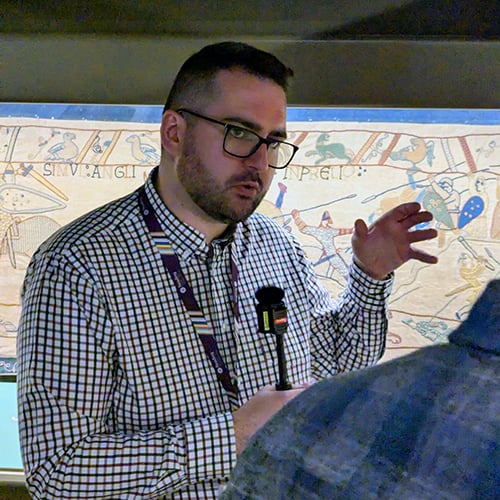
Ben Bishop
Ben Bishop has worked at Reading Museum for over a decade. He joined the team while studying at the University of Reading where he completed his BA, and later MA, in Archaeology and History. Ben specialises in medieval history which led to him becoming particularly fascinated with Reading Museum’s full-size facsimile Bayeux Tapestry. To share this passion, he leads guided tours to members of the public.
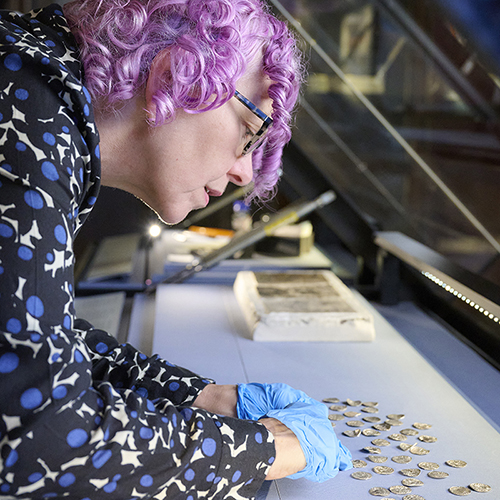
Wendy Scott
Wendy Scott is Curator: Hoards at the British Museum, where she is responsible for cataloguing post Roman to post Medieval coin hoards, and coin related objects, going through the Treasure process. Prior to taking up this post, she completed a PhD with the University of Leicester on the Lenborough hoard, the largest collection of Aethelred II and Cnut coins so far found.
She previously worked for the Portable Antiquities Scheme as the first Finds Liaison Officer Leicestershire and Rutland, where she spent 16 years identifying and recording all types of coins and objects. Image credit: ©British Museum
Episode 1
Whether in warships or life saving, Britain’s naval heritage has had a lasting impact on its currency for centuries. In this episode, explore the story of British naval history through coins of the past.
Episode 2
From pub signs to punk art, the robed and armed female figure of Britannia permeates British identity. Find out how this Classical figure developed through coinage and medallic art to become a figure of the nation.
Episode 3
The golden age of sail gave way to a world of global trade, where gold and silver could be sailed internationally for vast profit. Explore how the money made from and used for this trade shaped British history.