
The Regency Period
8 minute read
In this article….
Tower Hill | Regency Era | Artistry and History | Modern Masterpieces | Aesthetic Legacy
Summary
The Prince of Wales was sworn in as Prince Regent before the Privy Council in 1811. It marked the start of the Regency era, in which the Prince Regent ruled with the powers of king, because his father, King George III, was incapacitated through severe illness. He would go on to become King George IV in 1820, but the intervening Regency period was one marked by its own highly distinct fashions, styles, and aesthetic choices. It was an era in which the Royal Mint experienced a great change and renewal as the landscape of nineteenth-century London altered around it.
Tower Hill
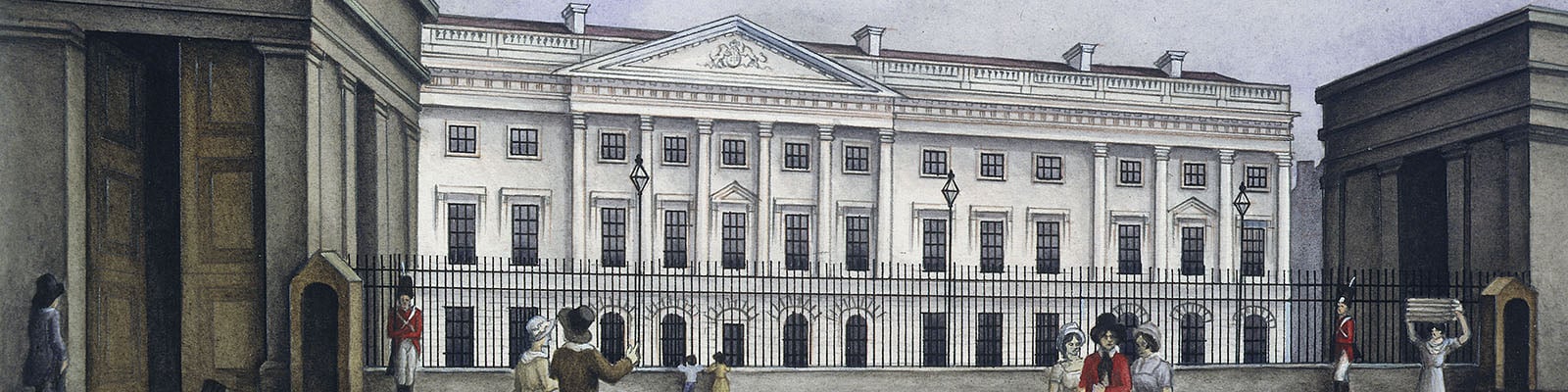
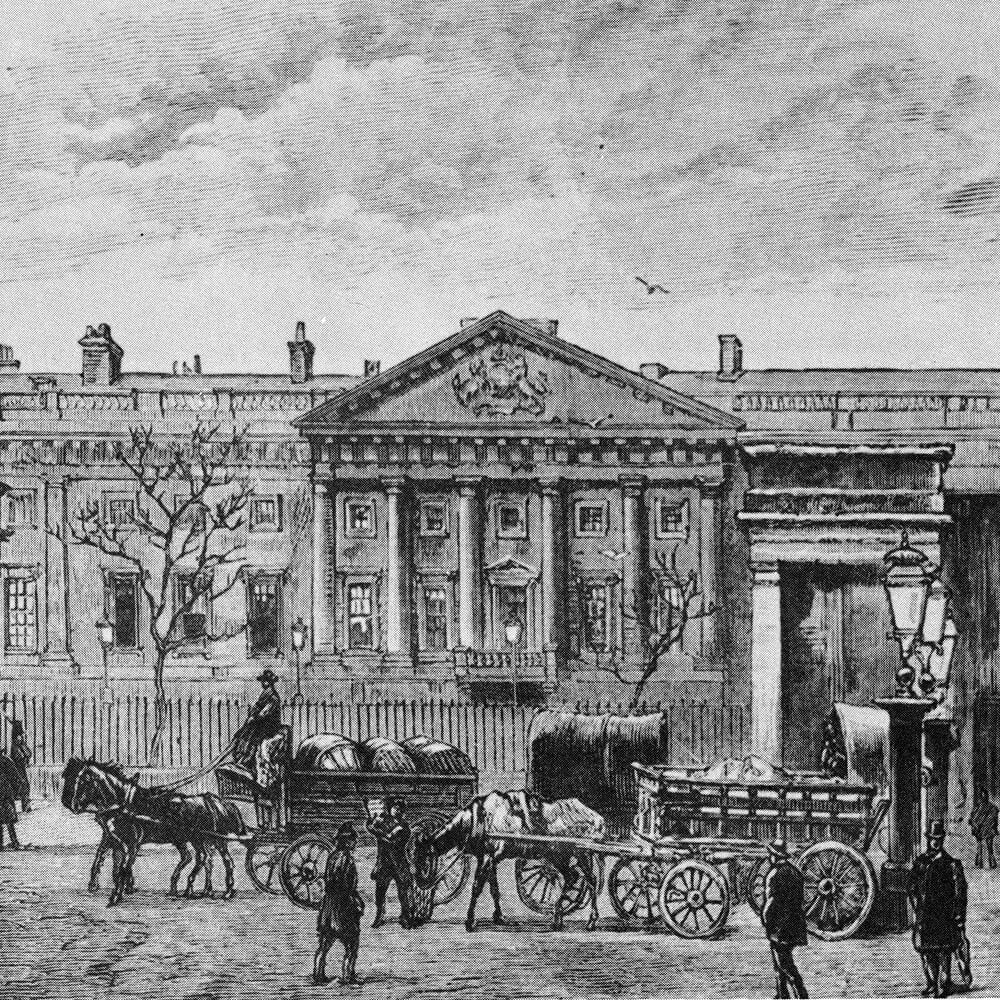
The operations of the Mint had increased substantially during its 500 years in the Tower of London, but it was no longer possible for the Mint to continue to grow and thrive in the cramped conditions there. The acquisition of Matthew Boulton's faster and more effective steam-powered machinery necessitated a larger, custom-built space for coin production. A new location was sought, and one was found just 100 yards away from the Tower, on Little Tower Hill.
The Royal Mint commissioned the surveyor James Johnson and his successor Robert Smirke to design the new building, and they produced a classically inspired frontage that was fitting for the grandeur of the Royal Mint's new home. The building was completed in 1809, with Mint officers describing it as "stupendous and beautiful". Not only was it a physically striking building, but the more efficient layout within brought about a logical flow of operations, and production grew substantially as a result. One of the finest buildings in London, Tower Hill still stands today as a powerful visual symbol of Regency elegance. The move into the new buildings proceeded over several years. Striking commenced in the new premises in August 1810, but the keys to the old Mint were not relinquished until August 1812.
Regency Era
The Regency era is often defined by a distinctive blend of aesthetic and stylistic choices that called back to classical styles, romanticism, or an exotic sense of worldliness favoured by the Prince Regent. Artistry and aestheticism were publicly celebrated, and it is in this context that a new and important figure emerged in the Mint.
William Wellesley Pole, the brother of the Duke of Wellington, was appointed as Master of the Royal Mint in 1814. Depicted here in an engraving by C. Picart, drawn by J. Wright from W. Owen RA's original picture, Pole was a man of considerable influence and with a keen eye for the aesthetics of the coinage. He oversaw in his appointment a great deal of technological and economic developments that altered the shape of the Royal Mint and of Britain. He energetically managed the renewal of coinage in 1816, supervised the production of the Waterloo Medal and reformed the administration of the Mint for a new industrial age.
William Wellesley Pole was of the opinion that British coins should be perfectly produced on a technical scale but also works of art in and of themselves. His hard work was quickly recognised by the press, which acknowledged Pole's "diligence and anxiety in the discharge of his duty". He would remain as Master of the Mint until his retirement in 1823, leaving behind a legacy of artistic prowess that set a tone for the future of the Mint and its worldwide influence.
Artistry and History
The Regency era marked the start of what would become a century of aestheticism on Britain's coins, heralded by William Wellesley Pole's drive for a coinage as beautiful as it was functional. In 1816, a dissatisfied Pole was to observe that "not only is there no collection of coins in His Majesty’s Mint, but that there is not a single proof coin or a single serviceable matrix or puncheon preserved in the offices", and in a signed memorandum acknowledged the need to establish a collection of proof coins and coinage tooling detailing the Mint's work.
The Royal Mint Museum was established on 12 February 1816, to overcome Pole's concerns at the absence of coins and medals held by the Mint. In an era that increasingly uplifted the arts, Pole was committed to the quality and design of the coinage, building up a collection that would include, promote, and be of perpetual service to artists and engravers. Alongside its great many other charitable activities, the Royal Mint Museum still fulfils this function to this day. From that time on, a proof specimen of every coin and medal struck at the Mint was set aside for the Museum along with coinage tools. The accessions register records that the 1813 Military guinea was the first coin in the collection. The oldest object in the collection dated to around 1801. This thankfully changed in 1818 when a significant donation of coins, medals and books from the estate of Sarah Sophia Banks greatly enhanced the Museum’s collection.
Modern Masterpieces
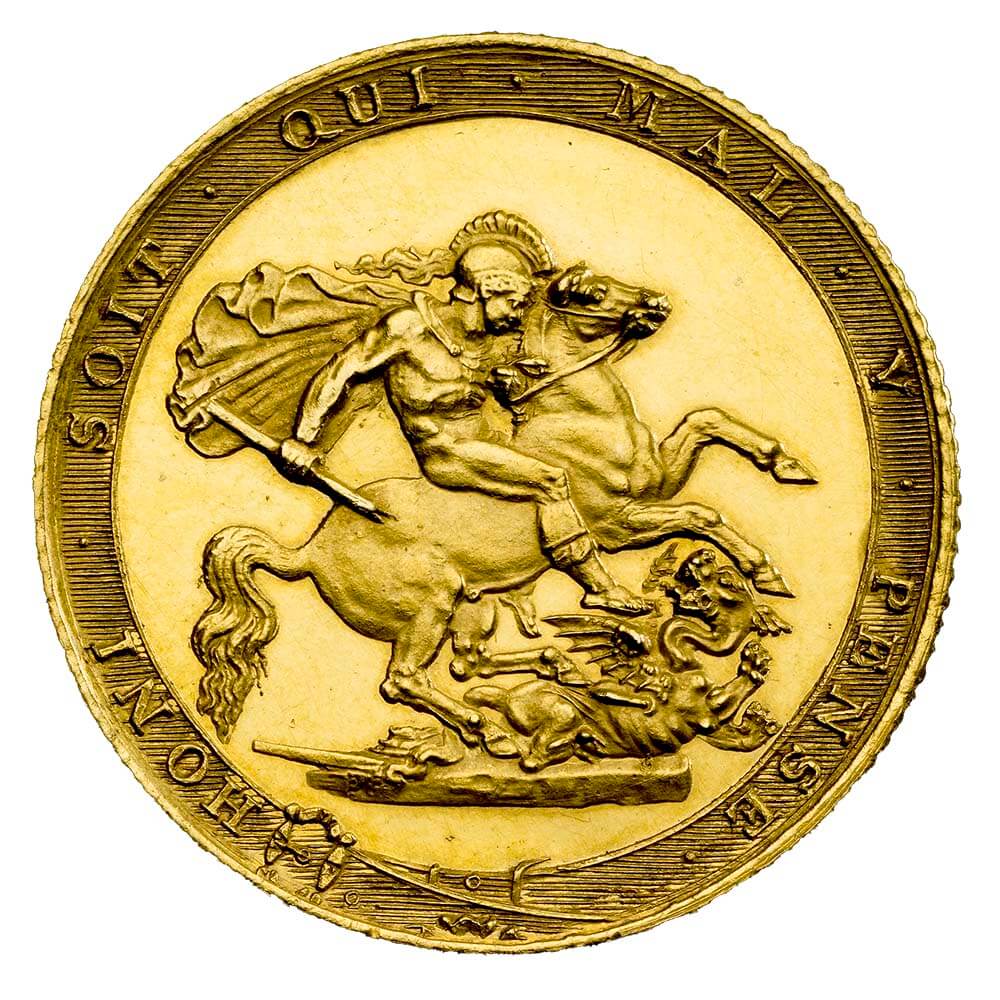
One of William Wellesley Pole's most laudable yet controversial decisions proved to be the hiring of the renowned Italian artist Benedetto Pistrucci, whose St George and the Dragon design proved so iconic it is still used on sovereigns to this day. Arguably the most mercurial and temperamental engraver to work for the Mint, Pistrucci was initially commissioned to produce coinage models of George III for an 1817 issue, some six years into the Prince Regent's primacy. A gem engraver by trade, Pistrucci cut the original models in his natural medium of red jasper, and three of these models have survived in the Museum collection today. Pistrucci was initially inexperienced at working with steel, and the task of engraving his design for use on the half-crowns of 1816 was given to the Chief Engraver, Thomas Wyon. The design was widely criticised after release into circulation and became known colloquially as the 'Bull head' for its bulky depiction of George III, blame for which Pistrucci landed squarely at the feet of the Mint engravers spoiling his design.
So began Pistrucci's career at the Mint as one marked by disagreements. Upon Thomas Wyon's death in 1817, Pistrucci found himself barred from the promotion to Chief Engraver on account of being a foreigner. The position remained vacant for a decade, until the 1828 appointment of William Wyon, the cousin of Thomas Wyon and undoubtedly Pistrucci's organisational junior. Pistrucci was awarded instead the newly created position of Chief Medallist, despite in that decade proving disruptive and uncooperative.
Thankfully, Pistrucci's legacy is one of aesthetic mastery rather than uncooperative temperament. The modern gold sovereign first made its appearance in the summer of 1817 as part of a set of sweeping coinage reforms. Taking its name from the Tudor coin first established by Henry VII, the sovereign featured Pistrucci's classically inspired depiction of St George and the Dragon and went on to become the pre-eminent gold coin of the nineteenth century.
Aesthetic Legacy
The aestheticism of the Regency period, alongside the diligent work of engravers like Benedetto Pistrucci and Mint officials like William Wellesley Pole, set a standard of British coinage that would go on to define the nineteenth century. The creation of the Chief Medallist post, though one born of strife between two masters of their craft, likewise meant that the Mint's medallic work was elevated to new heights. The level of detail and design consideration in medallic art is perhaps demonstrated most clearly in the George IV Coronation Medal, itself marking a symbolic end to the era as the Prince Regent was crowned as King George IV on 19 July 1821 following his accession in January 1820.
The artistic triumphs of the coinage under the Regency Era and the subsequent reigns of George IV and William III undoubtedly set the stage for the great stylistic and technological developments at the Royal Mint in the Victorian period.
You might also like


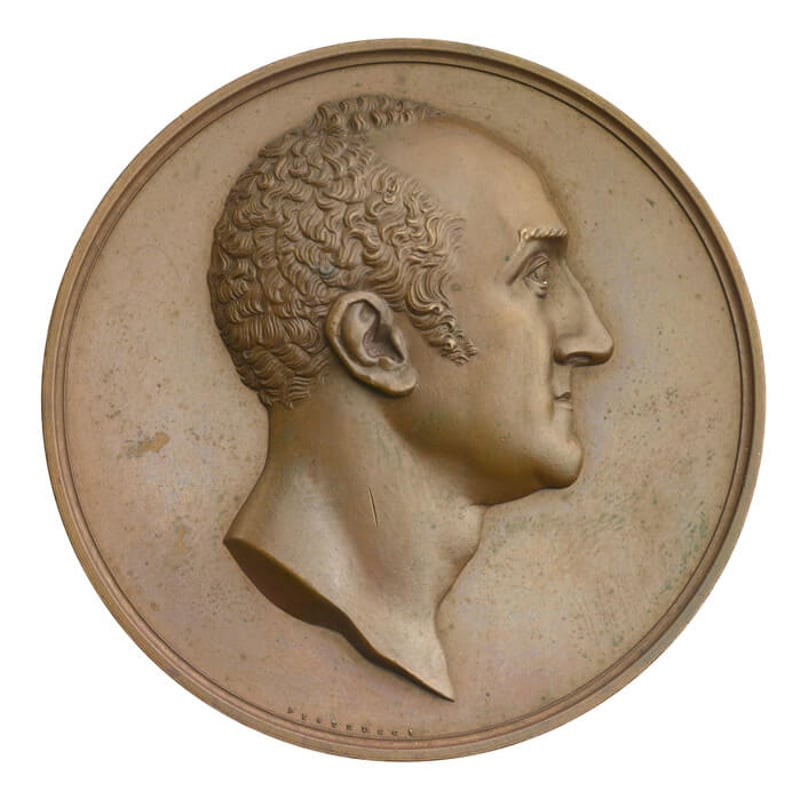
William Wellesley Pole, Master of the Royal Mint 1814-1823
Pole was a man of energy, ability and influence.
