
Guests
Throughout both seasons of the podcast we’ve been joined by special guests from national institutions, museums, and research networks. Find out more about each of our podcast guests below.
Season 2
Dr Janette Bright
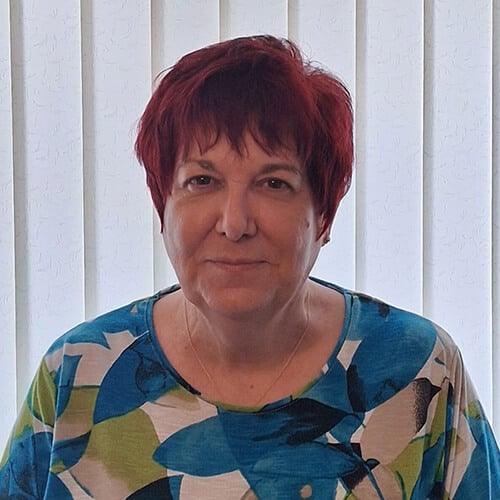
Janette first became fascinated in the Museum and archives of the eighteenth-century London Foundling Hospital (established 1739) back in 2004. Her initial interest was in the Museum’s most poignant objects of its collection, the foundling tokens. These everyday items left with infants admitted to the Hospital, developed into a curiosity to learn more about the history of the institution and especially the lives of the people who used, worked and governed there.
Janette has been involved in research for many historic exhibitions and displays both at the Museum and Coram, the charity that continues the Hospital’s work albeit in new ways. Having attained a BA (Hons) with the Open University in 2016, Janette went on to take a formal qualification in historical research, completing a Masters degree in 2017 at the Institute of Historical Research, School of Advanced Study, University of London. In April 2025, she completed her studies, successfully obtaining a PhD with her dissertation The London Foundling Hospital: Risk Reputation and Trust in an Eighteenth-Century Institution.
Janette continues to work part-time as an Assistant at the Foundling Museum, as well as teaching beadwork at an adult education arts centre. She has recently joined the volunteer research team for Stow Maries Great War Aerodrome, near her home in Essex, taking her historic interests in a whole new direction.
Jeremy Burrows
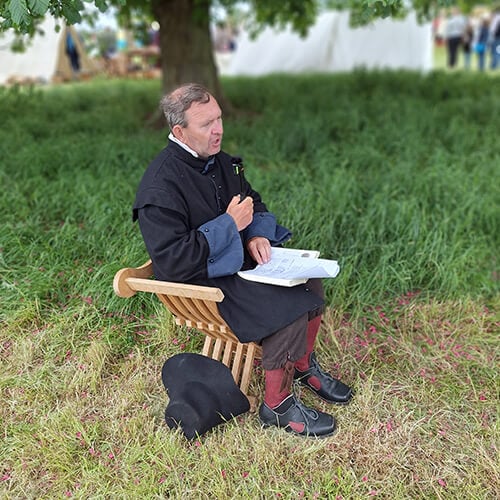
Jeremy Burrows is a retired solicitor and teacher who grew up in and around Cambridge. He read law at Magdalene College, Cambridge, where he won the Archie Leslie prize. Jeremy also has an LLM in Canon Law from the University of Wales and a PGCE from Warwick university.
After qualifying as a solicitor in private practice Jeremy spent the remainder of his legal career in the Government Legal Service where, among other things, he delivered training on the law and practice of Judicial Review. Following early retirement from the law he taught mathematics in Wellingborough. He has a life-long passion for numismatics, as well as being a legal and constitutional historian. He has been involved in historical re-enactment for over 40 years, focusing mainly on the Tudor period and the 17th century, and has a particular interest in the 17th century digger movement and the dissenter John Bunyan. His passions all collide in the rich and varied coinage of the English Civil War period.
Jeremy is a supplier of replica coins for use in historical re-enactment and education, and can be contacted on allthatglisterscoins@gmail.com
Eleanore Cox
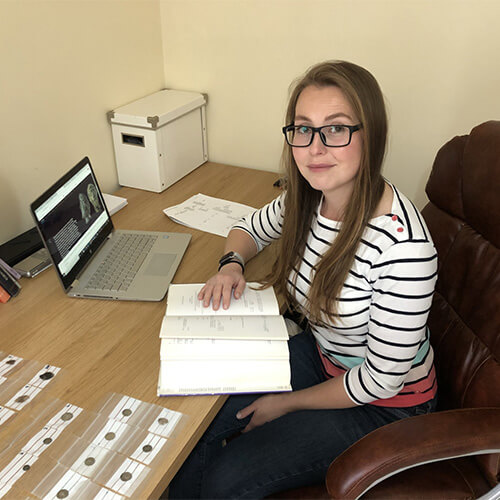
After completing her degrees at York University Eleanore Cox began working for the Portable Antiquities Scheme. She has worked in a number of regions recording objects and coins found by members of the public and processing items of Treasure. From Northumberland to Northamptonshire, Eleanore has worked with numerous archaeological units, community groups and museums across the country over the last 15 years.
Dr Will Houstoun
Will uses his expertise in conjuring and its history to help tell stories, build atmosphere, and create astonishing moments. He has worked on theatre projects including Make it Happen (Edinburgh International Festival); Don Giovanni (Festival d’Aix en Provence); Dealer’s Choice (Donmar Warehouse); The Heavenly Score (Beijing Opera House); The Comeuppance (The Almeida); The Rake’s Progress (English Touring Opera); The Rhinegold (The Coliseum); The Haunting (The New Vic); The Witches (National Theatre), Guardians of the Galaxy (Secret Cinema); The Sorcerer’s Apprentice (Northern Stage); The Twilight Zone (The Almeida/West End); and Katya Kabanova (Royal Opera House). Film and television includes: The Mirror and the Light dir. Peter Komisky (2024); Wolf Hall dir. Peter Kominsky (2015); Hugo dir. Martin Scorscese (2011).
Will is also performer in residence at the Imperial College/Royal College of Music Center for Performance Science (London), holds a literary fellowship from The Academy of Magic Arts (Los Angeles) and is a past winner of the European Magic Championships. His PhD explored the history of magical education and he has found innovative ways to use magic as an educational tool with organisations including the United Nations Development Programme and the World Economic Forum, as well as as a therapeutic tool for young people with a range of challenges.
Helen Pankhurst CBE
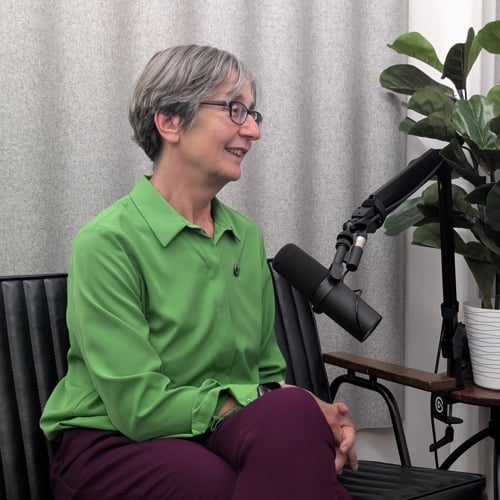
Helen Pankhurst CBE is a women’s rights activist and advisor to the humanitarian and development organisation CARE International. She is also a Visiting Professor at MMU and was the first Chancellor of the University of Suffolk (2018-2025). The great-granddaughter of Emmeline Pankhurst, she carries on the legacy e.g. through Centenary Action and GM4Women2028. Publications include: Deeds Not Words, the Story of Women’s Rights, Then and Now (2018).
Bob Meggs
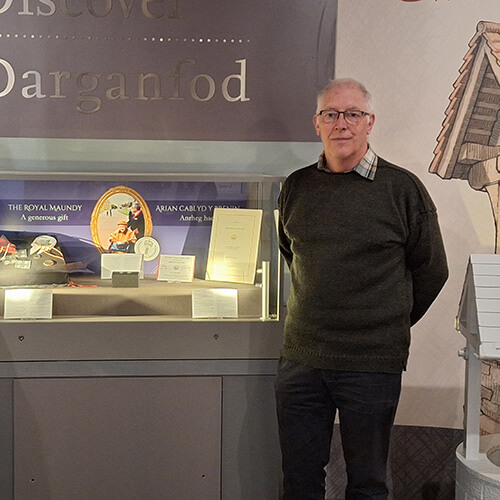
Dr Bob Meggs is a Chartered Engineer and retired ship designer who is the son of Royal Maundy recipient Mrs Freda Meggs.
In 2016, Mrs Meggs was one of 180 people, 90 women and 90 men, all in their 90th year, the same age as the late Queen at the time, to receive the Royal Maundy money at Windsor Castle, in recognition of a lifetime of Christian service.
She was keenly aware of how special they were and didn’t want them to end up forgotten in a drawer once she had passed away. It was after visiting the Royal Mint Museum when Bob’s wife suggested she might consider bequeathing them to the Museum so their story could be told for years to come. Freda saw herself as a custodian of these special coins, which she bequeathed to the Royal Mint Museum on her death in 2022.
Dr Daniel Rignall
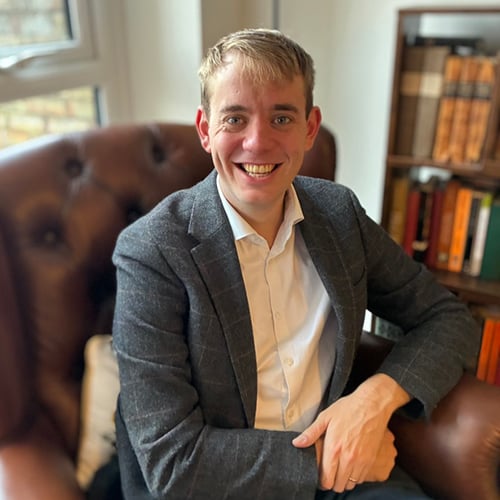
Dr Daniel Rignall is a historian of early modern Britain, specialising in religious and political ideas. He holds a PhD from the University of Leicester and an MPhil from the University of Cambridge. His doctoral research examined the interpretation and influence of the Old Testament in the Age of Enlightenment, looking at the role of the Bible in politics, science and popular culture. A keen numismatist, he appreciates the importance of coins as historical evidence; at the Royal Mint Museum he worked on a research project which explored biblical inscriptions on early modern coins.
Dr Andrew Strangeway
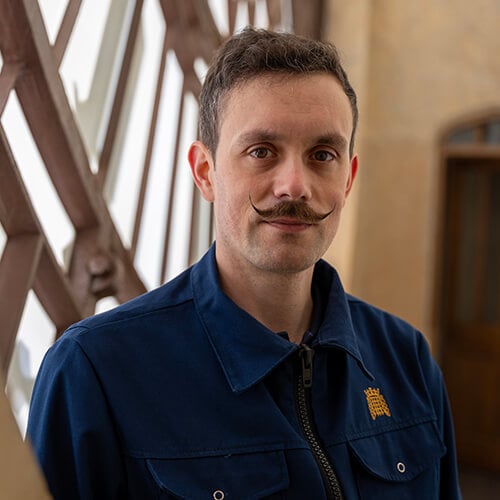
Dr Andrew Strangeway is a clockmaker at the UK Parliament, where he is part of a small specialist team responsible for the care and running of around 300 antique clocks across the Parliamentary Estate, including the world-famous Great Clock in the Elizabeth Tower, affectionately known as Big Ben. Andrew’s background is in mathematics; he holds a PhD in algebraic geometry from Imperial College London and an MMath from Durham University. Since joining Parliament in 2023, following experience in a traditional clock repair workshop, he has taken on the unique responsibility of regulating the Great Clock to ensure it keeps perfect time, a task carried out using predecimal pennies, halfpennies, and farthings. He brings his expertise in mathematics to the precise timekeeping of the nation’s most iconic timepiece.
Gordon Summers
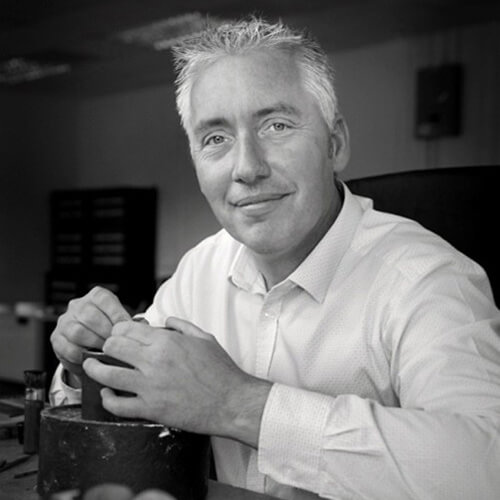
Gordon Summers, Chief Engraver at The Royal Mint has been at the helm of some of the most important coin and medal developments of the 21st Century since 2008. These include the last definitive portrait of Her Late Majesty Queen Elizabeth II, which was the first to be modelled digitally, the 2012 Olympic medals and the effigy of King Charles III. Gordon’s career at The Royal Mint spans over 30 years with him starting in 1992 as a Trainee Engraver. His expertise, and knowledge have helped to shape coin design in recent decades.
Members of the Sealed Knot
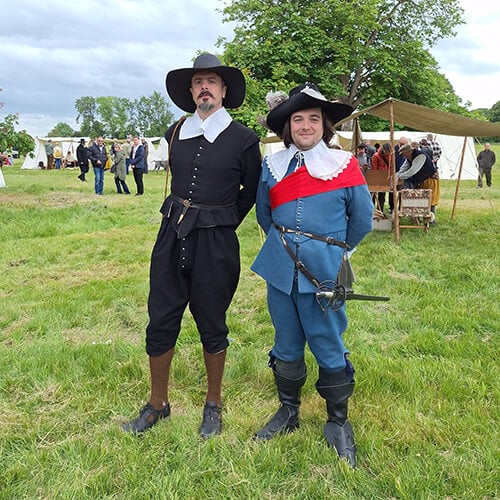
Founded in February 1968 by Brigadier Peter Young and a group of enthusiasts, the Sealed Knot began as a Royalist re-enactment group inspired by a garden party in cavalier costume. Within two years, membership had grown to over a thousand, and the society expanded to include Parliamentarian, Irish, and Scottish forces. Now approaching its 50th anniversary, the Sealed Knot is the largest re-enactment society in Europe.
Rt Revd Graham Usher
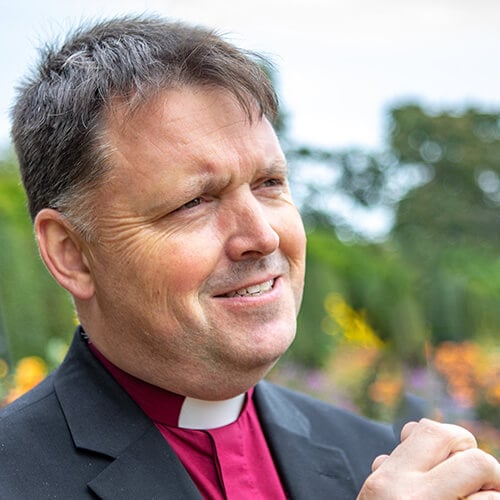
The Rt Revd Graham Usher has been Bishop of Norwich for six years. Last year he was appointed Lord High Almoner by King Charles III, making him a member of the Royal Household and responsible for the annual Royal Maundy Service when the King and Queen give specially minted silver coins to selected older people in recognition of their Christian service to their churches and communities.
Bishop Graham spent part of his childhood in Ghana and graduated from Edinburgh University with a degree in ecological science before studying theology at Cambridge University. He was ordained in 1996. He is a keen beekeeper and the lead bishop for the environment for the Church of England. He is also lead bishop for biodiversity in the Anglican Communion. He is an active member of the House of Lords and his publications include Places of Enchantment: Meeting God in Landscapes, and The Way Under Our Feet, which explores the spirituality of walking.
Bishop Graham is married to Rachel, a GP, and they have two grown-up children.
Peter Williamson
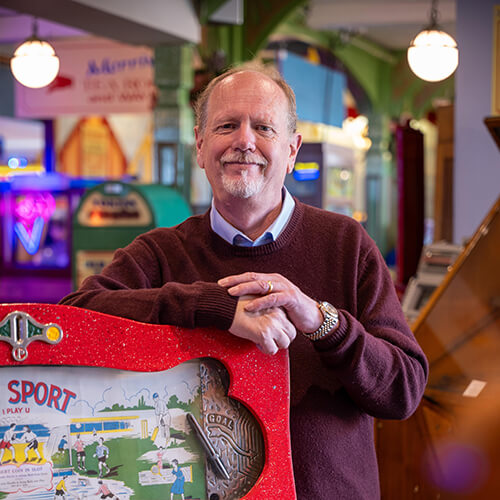
Peter is a semi-retired tourist attraction owner based in Norfolk formally owning and running the Merrivale Model Village in Great Yarmouth 2004 till 2017 and before building and running Williamson Traditional Family fair at Wroxham Barns ,Norfolk from 1989 till 2003.
Peters passion and love of these mechanical master pieces started back in is childhood with a family holiday to the Isle of Wight with a visit to a seaside Pier arcade that still had a few classic machines still in use ,but it was not till 1989 that collection began and since then his knowledge and skills have grown as has the collection taking to be the largest collections open to public in the East of England. Since his semi retirement Peter now presents the collection at two attractions in Norfolk, Wroxham Miniature Worlds and Merrivale Model Village.
Peter is very proud to have been chairman of the Norfolk and Suffolk Tourist Attract Assocation for many years and all ways said that he like many fellow attraction owners has obtain an honorary degree in " Crisis Management" through years of dealing with the day to day running a tourist attraction.
Season 1
Dr Richard Blakemore
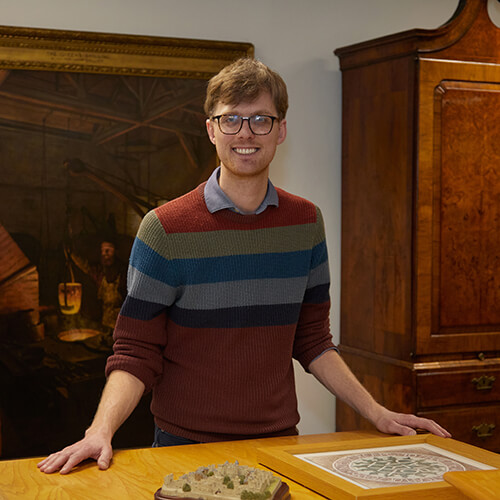
Richard Blakemore is Associate Professor of Social and Maritime History at the University of Reading. His research and teaching focuses on maritime communities during the sixteenth, seventeenth, and eighteenth centuries. He is the author of Enemies of All: The Rise and Fall of the Pirates, co-author of The British Civil Wars at Sea, 1638-53, and co-editor of Law, Labour, and Empire: Comparative Perspectives on Seafarers, 1500-1800 and The Maritime World of Early Modern Britain. He has appeared on TV shows about piracy and maritime history for Discovery, Channel 5, and National Geographic, and on local and national radio and podcasts in the UK and USA.
David Carter
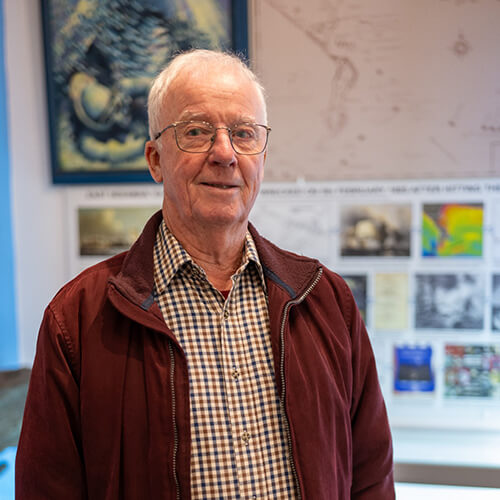
David is a retired Chartered Engineer with a love of the sea and history, so naturally Scuba diving for lost shipwrecks was his hobby. In 1980 he linked up with the late Ed Cumming and his amateur team of underwater archaeologists surveying the ‘Earl of Abergavenny’ wrecksite off Portland. 40 years later both Ed and David were still working on the project but in their retirement now living in Weymouth within 2 miles of the wreck. As a trustee of Portland Museum David was pleased that the Receiver of Wreck gave ownership of the collection to Portland Museum where it is on display and being curated by a team of volunteers. A National Lottery Heritage Fund has enabled the Museum to train volunteers in condition assessing and 3D imaging of artefacts that can now be freely accessed by everyone along with the story of Wordsworth’s shipwreck through Portland Museum’s website.
Dr Kevin Clancy
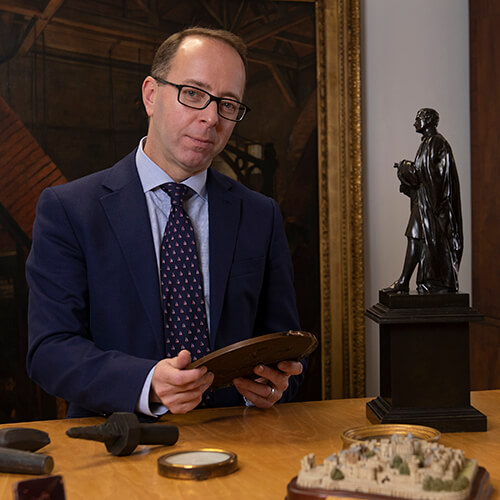
Dr Kevin Clancy joined the Royal Mint in 1992. He is a historian who has written and lectured extensively on the history of the Royal Mint and the British coinage. As Director of the Royal Mint Museum he has played a central role in shaping the future of the Museum as a charity through its education, publication and exhibition programmes, including the creation of a permanent exhibition on the history of the Royal Mint at the Tower of London and at the Royal Mint Experience. His publications include Designing Change (2008), A History of the Sovereign: chief coin of the world (2015), The Royal Mint: an illustrated history (second edition, 2016) and Objects of War: currency in a time of conflict (2018). Since 2003 he has been Secretary to the Royal Mint Advisory Committee on the design of United Kingdom coins, official medals and seals. In 2016 he was elected President of the British Numismatic Society.
Dr Barrie Cook
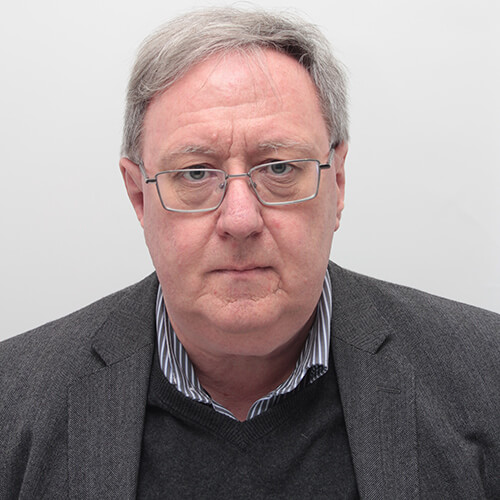
Dr Barrie Cook has been Curator of Medieval and Early Modern coinage in the Department of Coins and Medals at the British Museum since 1985. He has published widely in his area of specialism and curated many numismatic exhibitions, as well as contributing to many more general exhibitions at the Museum and elsewhere. He was curator of the major British Museum exhibition Germany: memories of a nation and adapted it for subsequent revivals in Berlin and Copenhagen. He was also the curator for Neil MacGregor’s four Radio 4 series. He has been Editor of the British Numismatic Journal and Secretary of the Royal Numismatic Society and is currently Treasurer of the UK Numismatic Trust.
Kate Eustace
With MAs in Medieval History (St Andrews) and the History of Art (Courtauld Institute), her first job as Assistant Curator, Dr Johnson’s House, Gough Square was followed a Museums Association Studentship at the Victoria and Albert Museum (1976-8). Thereafter a career in local authority (Bristol 1978-1985), university (Warwick 1985-1992; Ashmolean, University of Oxford 1992-2000) and national collections (National Portrait Gallery 2000-2004), always with a sculptural bias. Her influential exhibition catalogues include Michael Rysbrack, Sculptor 1694-1770 (1982), Let’s Not Be Stupid - Richard Deacon (1991), and Canova: Ideal Heads (1997). From 2004 to 2014 she was Editor of the Sculpture Journal. Kate continues to work with many public bodies, among them ArtUK’s ‘Your Sculpture’. She writes widely on sculpture and its contexts, from Britannia: Icon on the Coin (Royal Mint, 2016) to Lawrence Bradshaw's Karl Marx Memorial for the Henry Moore Institute/Whitechapel Art Gallery (2016). Her current book Hew Lorimer Sculptor is with the publishers (Forthcoming)
Sir Christopher Frayling
Sir Christopher Frayling is well known as an historian, critic and award-winning broadcaster. He has published extensively on popular culture, design and the history of ideas. He is the past Chairman of the Royal Mint Advisory Committee.
Dr Marian Gwyn
Marian Gwyn is a historian specialising in the Atlantic world and British imperialism. Her academic and professional interests focus on the heritage industry and the slave trade, and she is committed to fostering public engagement with the complexities of this past. Much of her current work supports museums and archives, helping them gain greater insight into their collections, and connecting them with diverse audiences to elicit more honest and engaging narratives around the artefacts and documents these institutions safeguard.
Beyond academia, she has influenced Welsh Government policy on diversity within the heritage and educational sectors, and as an educator, she teaches on Wales’s role in European global expansion. Her written work underscores the importance of broadening the stories we tell about our history, amplifying previously unheard voices. Her latest article, on diversifying museum practice, will be published by University of Wales Press in October 2024, and she is currently writing a book on the Jamaican sugar plantations of the Pennant family of Penrhyn Castle.
Victoria Ingles
Victoria Ingles is currently Principal Curator (Portsmouth) for the National Museum of the Royal Navy (NMRN), leading the team caring for the artefact collections across the Portsmouth area sites. She has more than 20 years’ experience working with the collections, with a particular interest in those relating to the Women’s Royal Naval Service, and has led multiple successful exhibition projects. Prior to joining NMRN she worked at National Museums Liverpool.
Alexzandra Hildred BA DSc DLitt MCIFA FSA
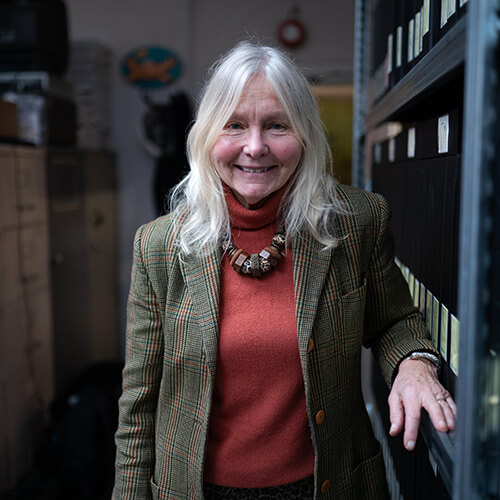
Alex is currently Head of Research and Curator of Ordnance and Human Remains at the Mary Rose Trust, having joined the project in 1979 as a graduate archaeologist. An archaeological supervisor during the 1979-1982 excavations, she has since directed the site monitoring, survey and excavations which culminated in recovering the stem in 2005.
Since 1982 she has been part of a small team responsible for evolving and delivering displays within the Mary Rose Museums. She has researched and published the weapons of the ship, producing one of the five volumes comprising the Archaeology of the Mary Rose in 2011 and in 2022 a Coffee Table Book. Her work with the human remains has been the subject of several documentaries and exhibitions.
A tutor in the formative years of the Nautical Archaeology Society, Alex has also delivered modules in underwater archaeology within the University sector. Alex has extensive experience on other underwater archaeological sites in the UK and has directed multi-season projects in Malta and Holland.
She has held posts as Chairman of the Institute of Field Archaeologists Maritime Affairs Group, ordnance advisor on the Government Advisory Committee on Historic Wreck Sites and nominated archaeologist for 7 of the 57 protected wreck sites in England. Affiliations include the Chartered Institute of Field Archaeologists and the Society of Antiquaries of London.
Dr Toby Jones
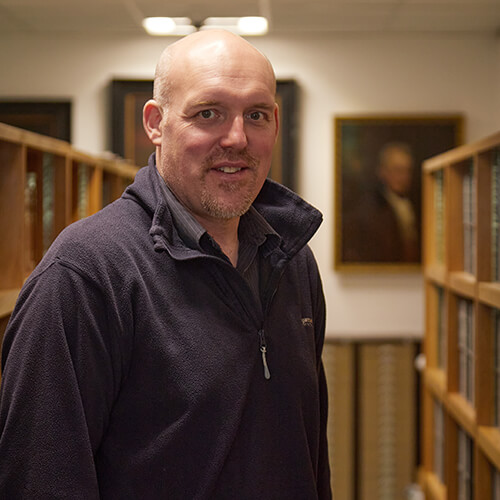
Dr. Toby Jones is a nautical archaeologist and the curator of the Newport Medieval Ship, a 15th Century clinker built merchant vessel found in the River Usk in Newport, South Wales, in 2002. He has worked on several other projects around the world, including the Red River Wreck in Oklahoma, the Aber Wrac’h I wreck in Brittany and the Mica shipwreck in the Gulf of Mexico. He has also participated in shipwreck surveys along the southern coast of Cyprus and in the Algarve in Portugal. Toby is a graduate of Oregon State University (BA-History) and Texas A&M University (MA-Anthropology – Nautical Archaeology), and the University of Wales Trinity Saint David (PhD in Archaeology). He is also an Honorary Research Fellow at the University of Wales Trinity Saint David, an External Expert at the University of Bradford and a Fellow of the Society of Antiquaries.
Hannah Matthews
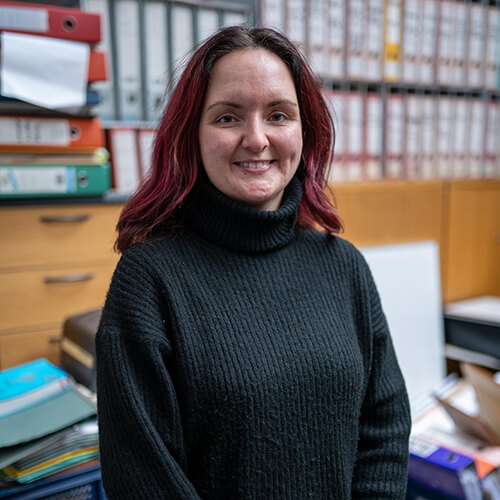
Hannah Matthews is Curator at the Mary Rose Trust, having worked previously at Burghley House Preservation Trust (2006-2010) and Historic Royal Palaces (2011-2020) in Operations, Project Management and Historic Building Conservation roles. She achieved a BA (Hons) in History, specialising in landscape archaeology at the University of East Anglia (2008-2011) before completing a Postgraduate Certificate in Architectural History at the University of Oxford (2014-2015). Hannah has also completed a MSc in Osteoarchaeology at the University of Sheffield (2020-2021). She is currently a part-time DPhil in Architectural History student at the University of Oxford, researching the life and career of James Nedam (c 1491-1544), Surveyor of the King’s Works for Henry VIII.
Stella New
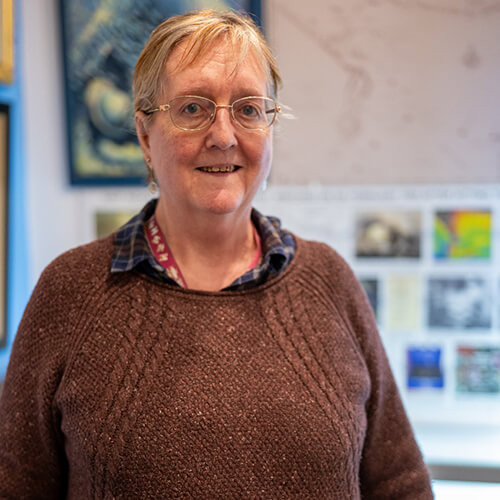
Stella moved to Portland from Yorkshire with her family in 1986. Having worked as a physiotherapist in the local hospital for 30 years, she retired in 2019, and became involved with a local research project based at Portland Museum. When the Museum re-opened in 2021, following COVID, she became a regular volunteer there. From November 2021 Stella was very involved in ‘Diving into the digital archives of the Earl of Abergavenny’ - a National Lottery-funded project to teach volunteers digital skills for photographing and recording historical artefacts. She was responsible for the majority of the collection documentation and have been involved in a number of outreach events, helping to increase public involvement in the project. Stella is also a Museum Trustee and is grateful to the Royal Mint Museum for the opportunity to spread the word about the invaluable work Portland Museum has done with the Abergavenny project.
Dr Eric Nordgren
Eric Nordgren is an ICON Accredited Conservator and Lecturer in Conservation at Cardiff University. He has 30 years experience as a conservator working with museums, universities, heritage agencies and private practice in the US, UK and around the world and a strong interest in the scientific understanding of metals, their properties and corrosion as they inform conservation. Through work on marine archaeological conservation projects such as the Queen Anne’s Revenge and USS Monitor in the USA and the London and Rooswijk with Historic England, Eric has had extensive experience working to conserve coins and other metal objects recovered from the sea.
Dr Kate Rogers
Kate Rogers is Deputy Receiver of Wreck at the Maritime and Coastguard Agency (MCA). The Receiver of Wreck (ROW) team administer the Merchant Shipping Act 1995 Part IX in relation to wreck and salvage, and are responsible for processing reports of wreck, and ensuring that the interests of both salvors and owners are taken into consideration by researching and establishing who owns wreck, and by liaising with finders, owners, and other interested parties such as archaeologists and museums. ROW also administers the Royal Fishes Prerogative for England, Wales, and North Ireland. Prior to joining ROW, Kate completed her PhD in archaeology at the University of Southampton, and has a background in commercial archaeology in the UK and Australia.
Crew of the Johanna Lucretia
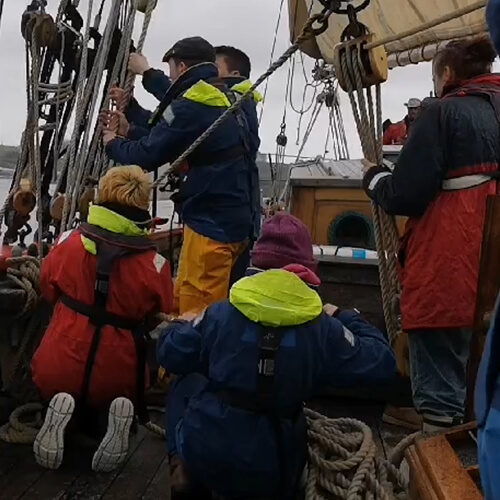
Island Trust are a registered charity providing life-enhancing, residential and day sailing activities for young people with special needs, disabilities, and those experiencing hardship and deprivation and the Johanna Lucretia is the largest of their vessels. As she is currently the only UK flagged topsail schooner in sail training, she is guaranteed to draw attention wherever she goes.
Johanna Lucretia is rigged traditionally, with lots of sheets (ropes) on board and the wide array of sails. The topsail schooner is arguably one of the most versatile of all sailing rig types, being able to sail quickly close to the wind with her fore-and-aft sails like our other vessels, but also has excellent downwind performance with a square topsail and course. Her spacious decks are ideal for group activities, and her large size, sheltered cockpit and high freeboard mean trainees feel safe at sea.