
George V
Summary
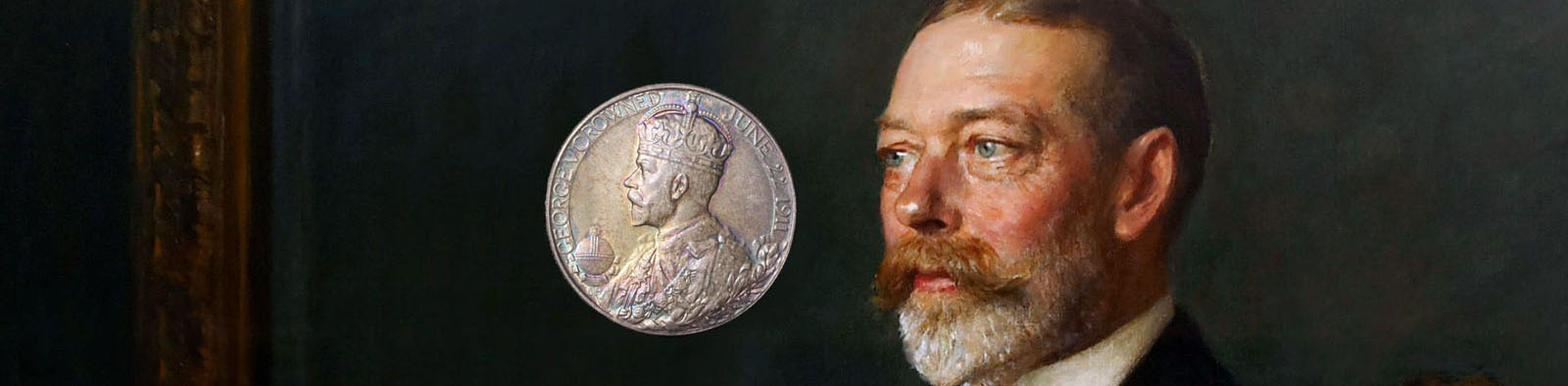
The coinage of George V was one circulating around the globe, as the Mint struck the British Imperial coinage not just in London but at branch mints around the British Empire. Production boomed in the early years of the reign, and the sovereign found fame as the chief gold coin of the world, with the obverse portrait of George V known and trusted worldwide. At home, that portrait loomed large – so much so that it needed to be reduced in size on the copper coins to prevent production issues. The onset of the First World War, and the subsequent interwar period proved a challenging one for the coinage, and by the end of the reign gold sovereigns had all but vanished from domestic circulation, and the silver content of circulating coins had been cut from .925 sterling down to .500 silver.
The Mint
The Mint was based at Tower Hill, the site it had occupied since leaving the Tower of London in 1810. During the reign the organisation would encounter several major challenges, foremost of which was the First World War. By 1914 the running of the Mint was still in good hands having fallen back into the care of career civil servants who, whilst not being great reformers, were competent and capable administrators. The Mint was also rapidly expanding. The new Silver Melting House had been completed in 1911, doubling capacity in order to match the huge increase in demand - production of coin having increased from 24 million pieces in 1870 to over 150 million in 1913. This had further led to an increase in staff, moving from just over 100 or so permanent staff in 1870 to nearly 300 by the start of the conflict. Furthermore, the staff were highly experienced; some 50 out of the 300 had been at the Mint for 30 years.
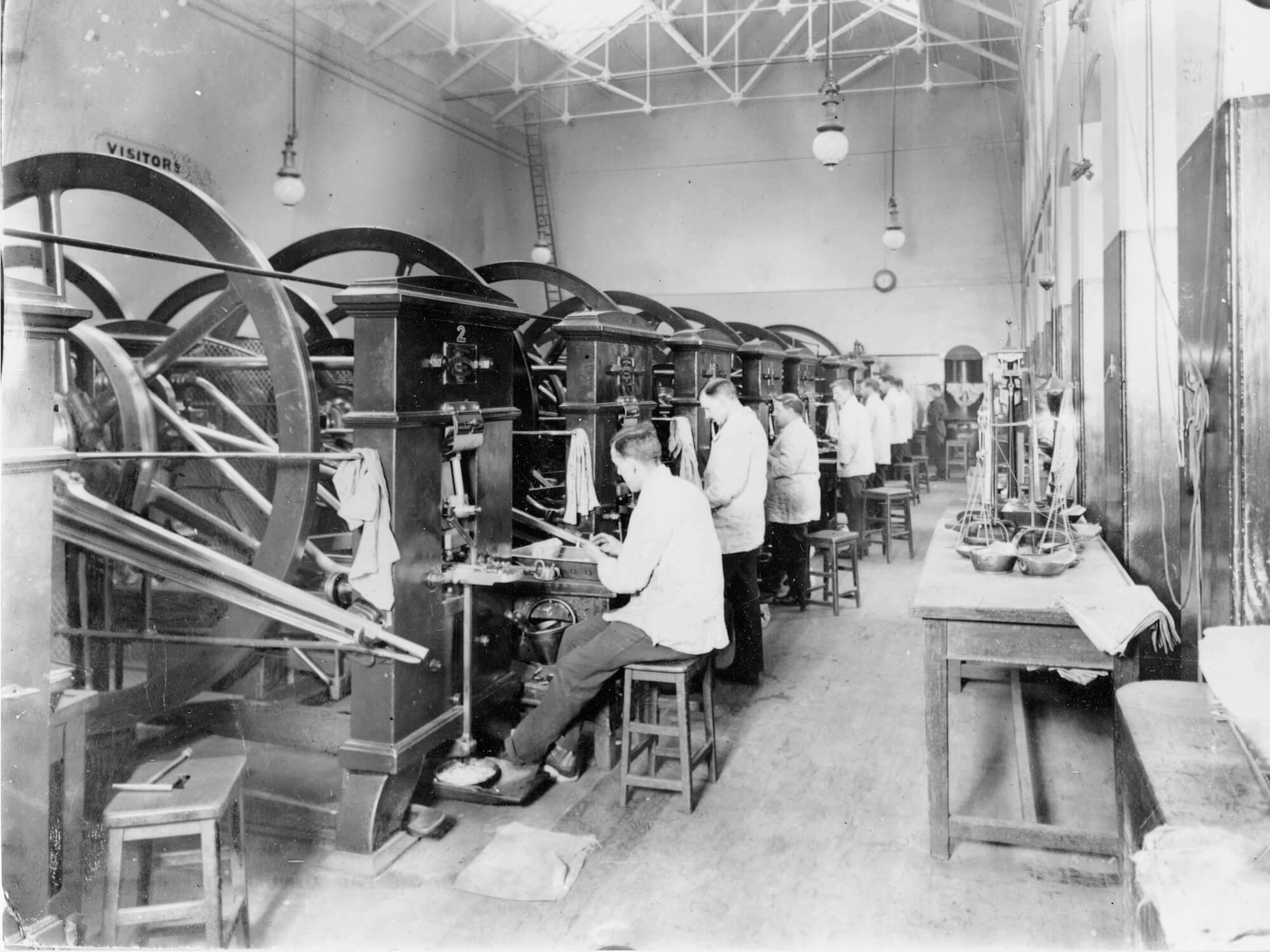
The Coin Press Room at the Royal Mint in London. circa. 1910
The coinage was an imperial one, sterling circulating throughout the Empire, and the Mint at Tower Hill was the centre of a network of branch Mints that stretched around the world. The first branch of the Royal Mint was opened in Sydney in 1855 and this was shortly followed by others at Melbourne and Perth, with Ottawa opening in 1908. There was even a short-lived branch at Bombay which struck coin for one year only in 1918 as a war time expediency. All these branches had a degree of autonomy in their day to day running but they were answerable to London, with decisions about staffing and expenditure originating from Tower Hill. Despite sterling being an imperial currency there was a move towards a more distinctive colonial coinages in the years prior to the war, with these being adopted by Australia, British East Africa and British West Africa.
The Mint was also expanding into new areas of operation. One somewhat unexpected responsibility that was entrusted to the Mint in 1910 was the creation of the plates and dies for the printing of adhesive stamps for postage and fiscal purposes. A high degree of accuracy was required in the creation of these as many parts needed to be interchangeable. The Mint’s ability to produce coins to a high degree of accuracy also led to a more direct involvement in wartime efforts, taking on the production of precision munitions work. Automatic balances and body–gauging machines were used to check the weight and shape of small arms cartridges, whilst the Mint also worked on precision gauges for cartridges as well as artillery dial sights.
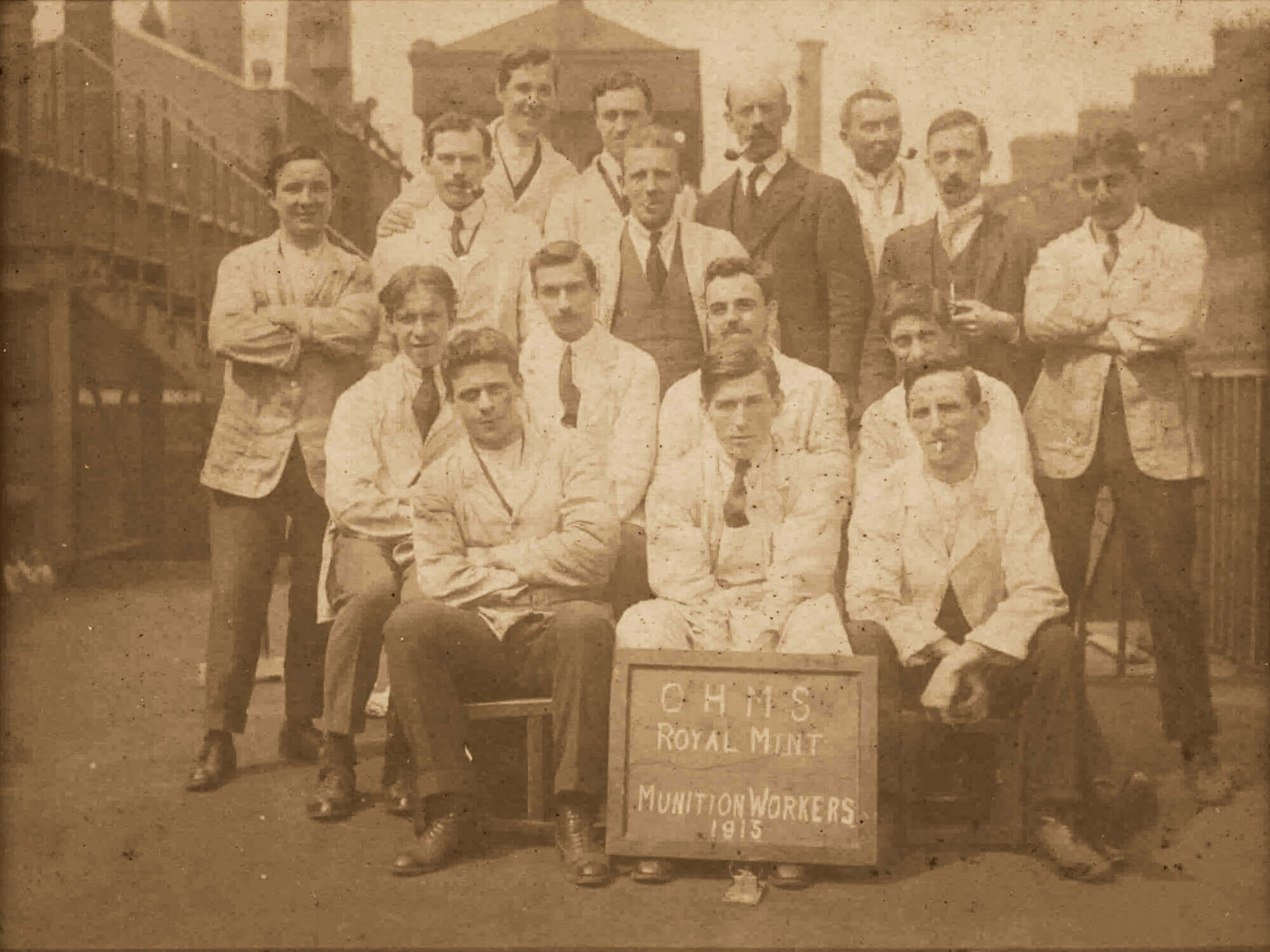
A group of Royal Mint munitions workers pictured in 1915
During the war the Mint was bombed, and four members of staff were killed during the raid of 13 June 1917. Mint staff did and were called up to fight, with 30 members joining immediately as either TA or reservists on the outbreak of war. To put this into context, this is approximately 10% of the workforce and, given the increased demand on the production of coins, this would have placed a strain on the remaining Mint staff. The Roll of Honour held in the Museum’s collection list the 138 names of members of staff that served in the forces during the conflict. This is a staggering number when there were around 300 staff on the books at the start of the conflict and in total eleven members of Mint staff lost their lives in active service.
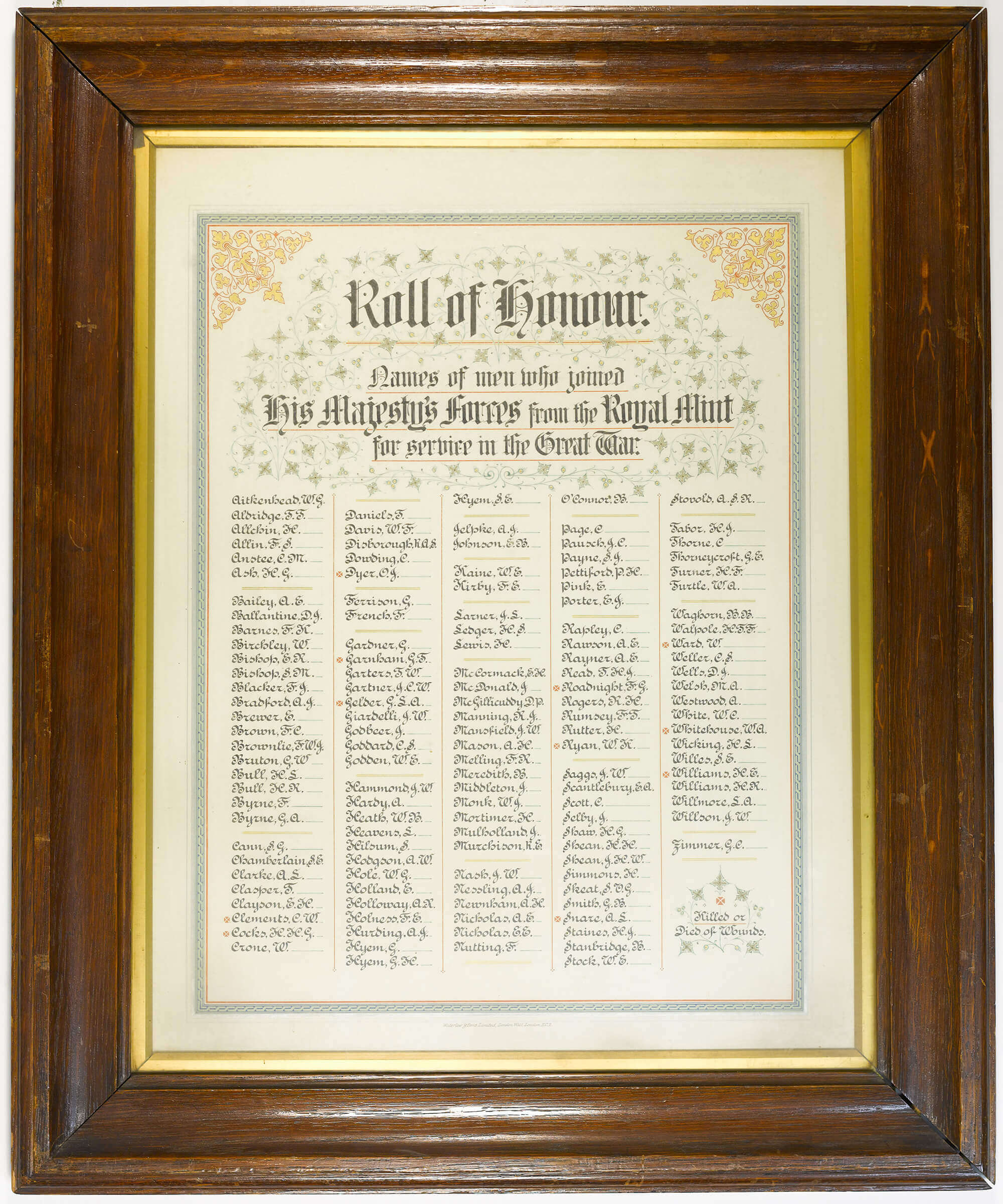
A Roll of Honour listing the 138 names of members of staff that served in the armed forces during the First World War
The Mint’s responsibility extended to striking medals for the armed forces. Production during the war would reach an unprecedented 100,000 pieces a year, but the bulk of the work came once the war was over. Some 15 million medals were produced after the war for all the various forms of campaign and service medals. This was 20 times more than those which had been issued for the Boer War and for a factory which could turn around 200,000 medals a year it represented a daunting figure. As with the production of coins, this work had to be subcontracted out to ease the burden on the Mint. It was decided that a medal factory should be established at Woolwich Arsenal with the aim being to train disabled soldiers to produce the new campaign medals and the site was equipped with plant and staff to enable it to strike 4 million medals a year. The dies for the medals were prepared at the Royal Mint, with production beginning in October of 1919.
Gold coinage
This was undoubtedly the jewel in the Royal Mint’s crown. By 1914 the active circulation of gold coin had reached something approaching £100,000,000 and those lucky enough to feel the reassuring weight of a sovereign in their pockets and purses could feel safe in the knowledge that what they possessed was a coin of the highest quality. In 1914 the Deputy Master of the Mint could claim that the condition of the gold coinage was one of the pre-eminent features of the British Currency. It enjoyed a prestigious position throughout the world, and the steps taken to ensure that the coin was struck to the highest standard of accuracy meant that it was trusted and accepted across the globe. The branches of the Royal Mint were also authorised to strike sovereigns and half-sovereigns identical to those struck at the Royal Mint, save for the addition of a small mintmark, with the four branches providing a little under 50% of the £100,000,000 of gold coin at large in 1914.
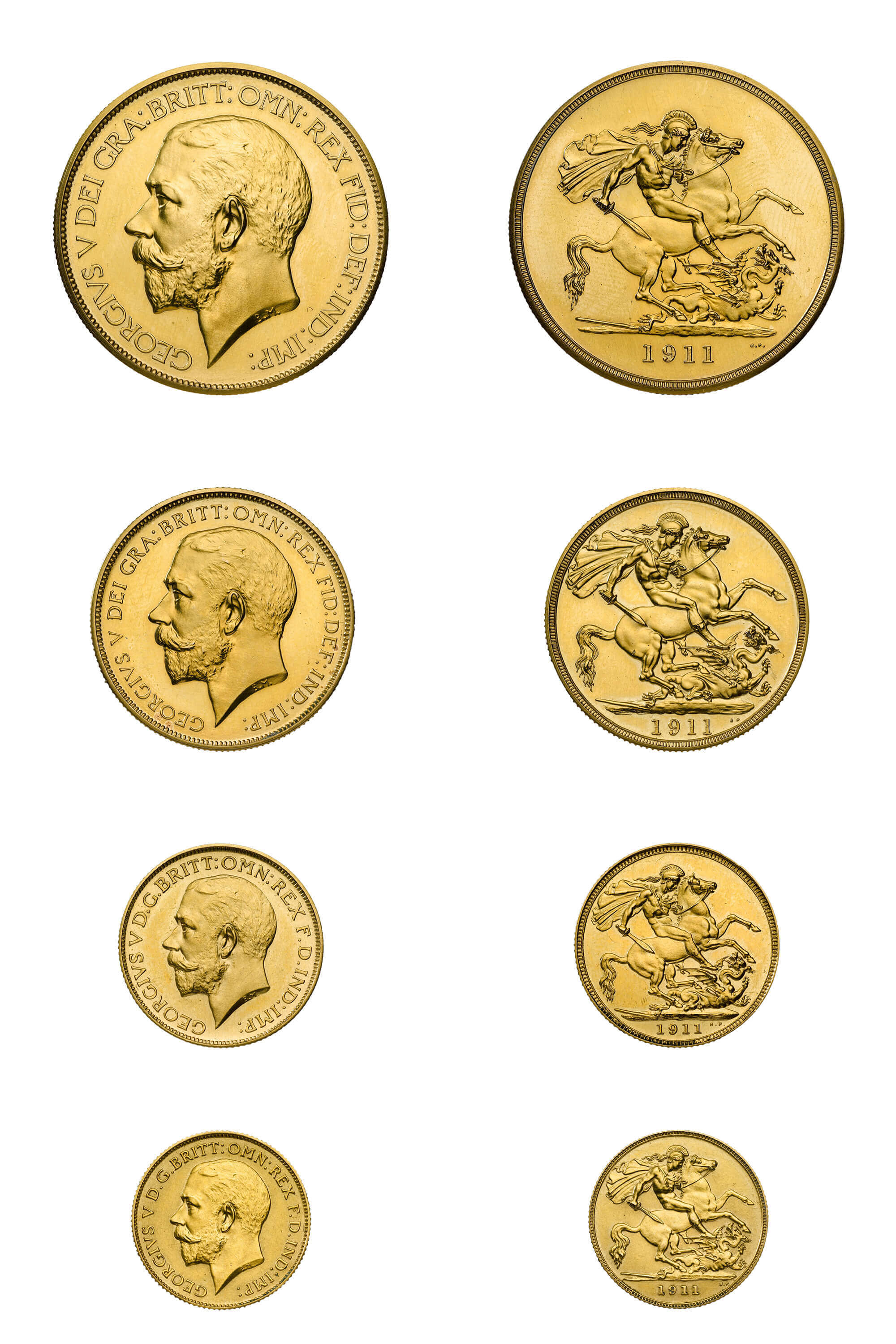
George V sovereign family. Five pound piece (RMM1833), two pound piece (RMM1836), sovereign (RMM1837), half-sovereign (RMM1860)
If the Chancellor of the Exchequer could say in 1869 that he felt that a circulating gold coinage was an extravagance, then it became even more so during wartime. Within days of the outbreak of the war the Government had issued Treasury notes for ten shillings and one pound with stern warnings issued by the Chancellor, David Lloyd-George, in the House of Commons to those who might consider hoarding gold.
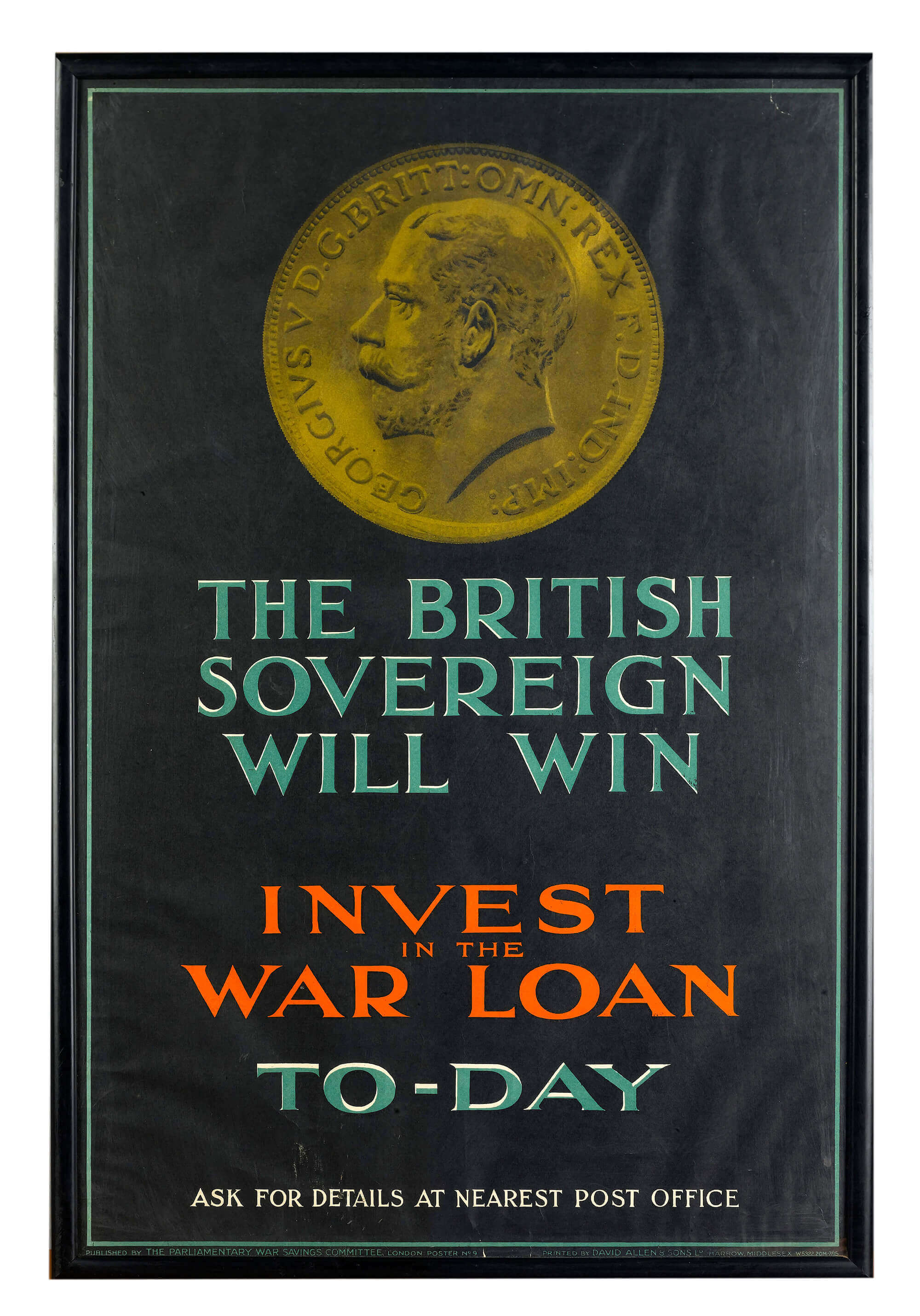
Poster from the First World War (1914-1918) encouraging people to trade in their gold coins
By the summer of 1915, gold had largely disappeared from circulation in London, although sufficient amounts appear to have remained in private hands to provide a good contribution to the War Loan of 1917. The striking of half-sovereigns ceased completely in London by 1915, and sovereign production lingering on for only two more years before ceasing entirely in 1917. It would be some years before regular production resumed in London. There was one brief spark, however, in 1925 when the United Kingdom returned to the gold standard. A number of lightweight sovereigns held by the Bank of England were sent to the Royal Mint to be melted down and restruck before being returned to the Bank’s vaults. Sovereigns continued to be struck at the branch mints, but these coins were intended for the national reserve rather than general circulation, and even this production of branch mint sovereigns ground to a halt during the reign. The branch in India produced coins for just one year in 1918, Canada ceased production in 1919, Sydney in 1926, Melbourne and Perth in 1931 and the South African branch struck sovereigns between 1923 and 1932.
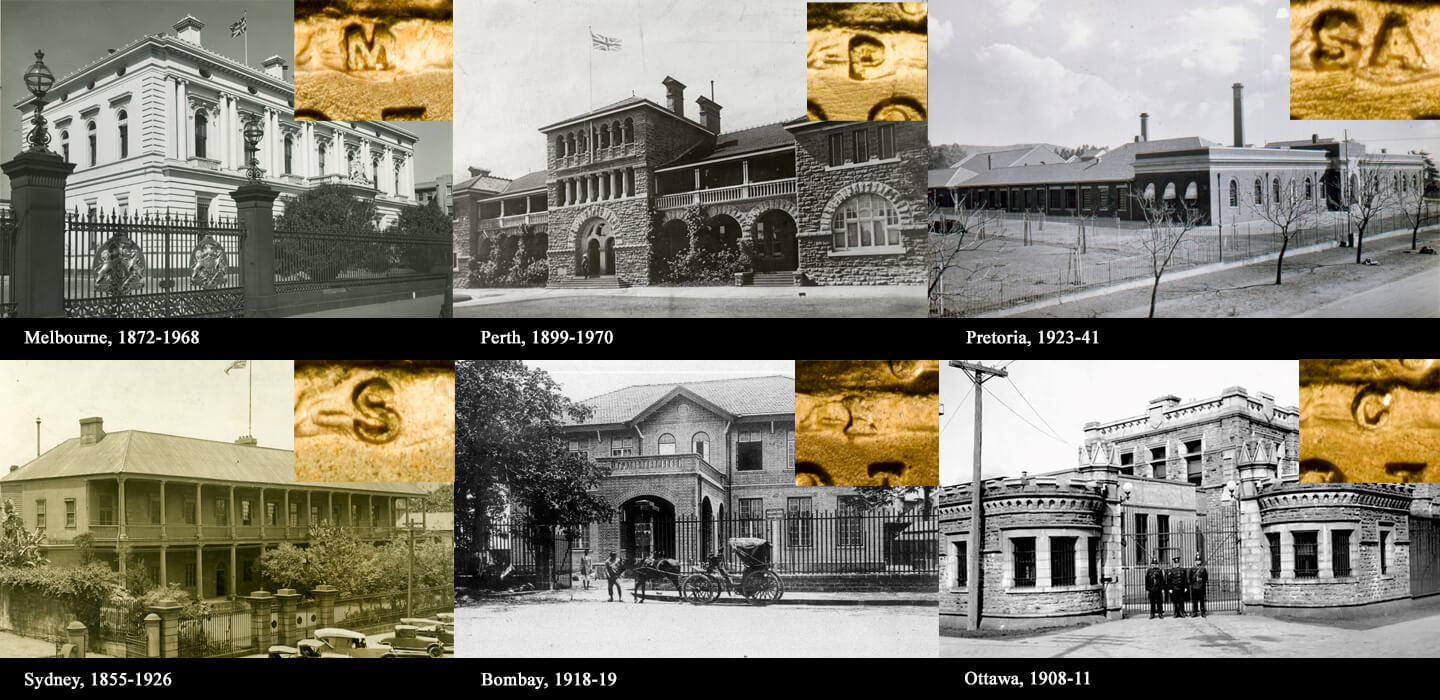
Branch mints and their corresponding mint marks
Silver coinage
The war, and the disappearance of gold from circulation, necessitated a huge increase in the demand for the domestic silver. The 188 million imperial coins struck in 1914 rose to 267 million by the end of the war and this placed a huge strain on the Mint’s capacity. Blanks for shilling had to be bought in and some obtained from as far away as Ottawa.
One of the most significant long-term effect of the First World War on the coinage was the change from 925 sterling silver to 500 silver. The war had gradually pushed the price of silver and by the autumn of 1919 it nearly reached the magic figure of 66d per ounce. Any rise above this figure would make the production of silver uneconomical so it caused some alarm in the government when this finally happened. Ultimately, the decision was taken to adopt a 500 silver alloy, with the Silver Coinage Act passed in 1920. The hope was that that by reducing the silver content to such a degree that the silver coinage would have longevity if the silver price should rose even higher. The Mint struck 500 silver coins for the first time in April 1920, and three different 500 silver alloys were used in the first two years alone.
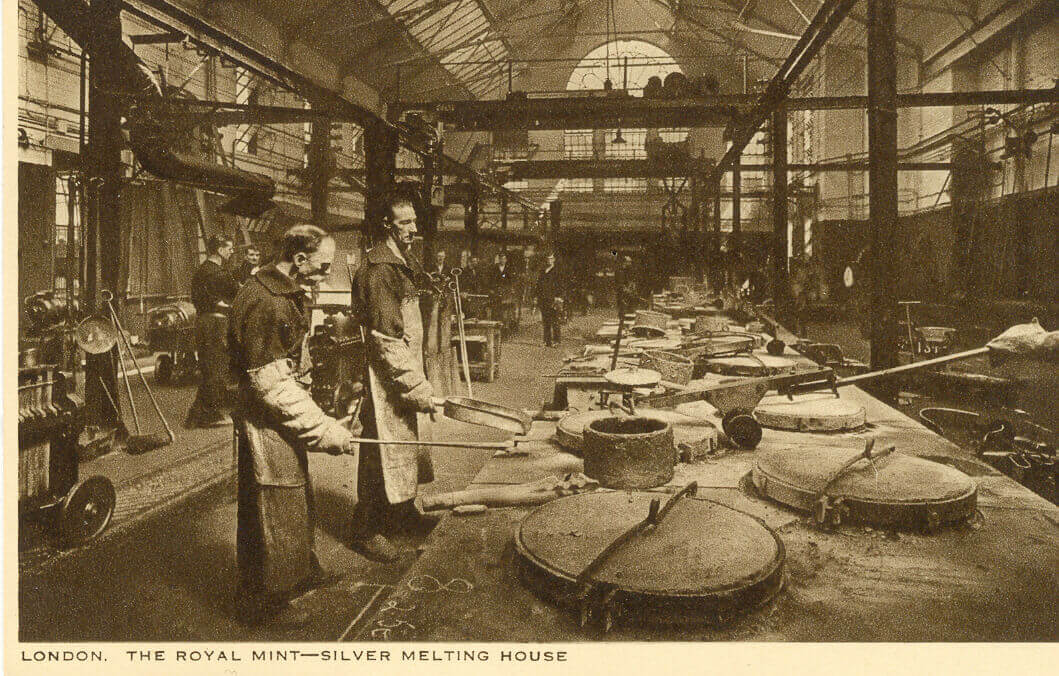
A postcard of the silver melting house at the Royal Mint in London in the early 20th-century
The designs of the first silver coinage of George reign varied little from the heraldic model of previous reigns, though the Deputy Master of the Mint, Robert Johnson, was keen to refresh these rather unimaginative designs. Possessing a keen and appreciative eye for art, Johnson had already established the Royal Mint Advisory Committee in 1922 and in 1927 new reverse designs by the artist George Kruger Gray were approved by the king. Though still heraldic in nature, they were given a freshness by Kruger Gray’s handling and reflected an artist with an understanding of, and passion for, heraldry. The series also included the crown piece, the first such issue since 1902, and Johnson had allowed himself to be swayed on the matter by the lobbying of the numismatic community, in particular his former tutor at Oxford and MP, Sir Charles Oman. A full series of the new coin designs dated 1927 can only be found in the proof sets of that year, circulating version being released the year after. Sales of the proof sets began in December 1927, the timing purposefully coinciding with Christmas in the hope that the sets would prove to be an attractive present and no fewer than 10,000 were sold by the end of the year. The crown continued to be struck for some years, but the numbers issued was never large, being as low as 932 in 1934.
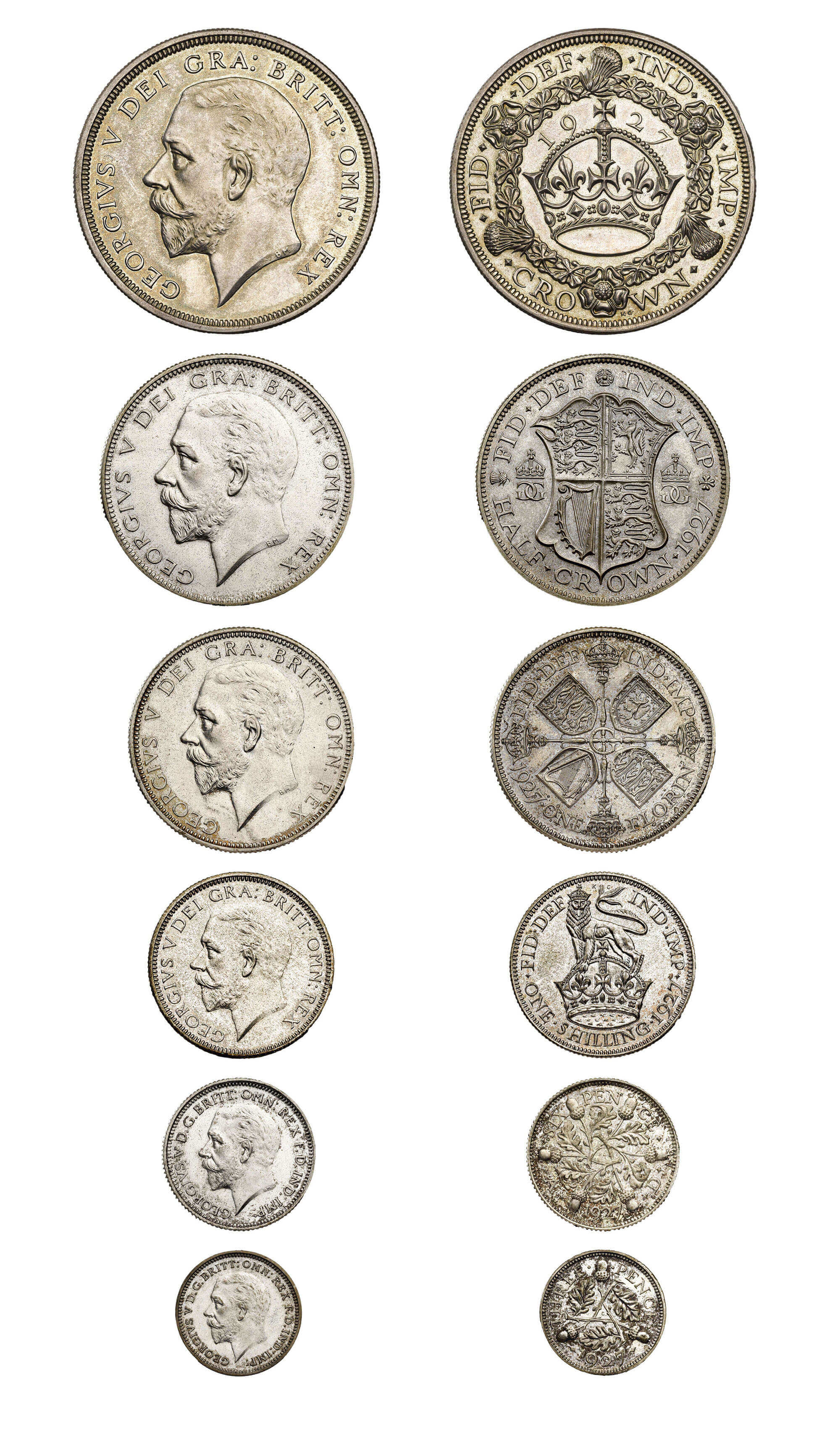
George V silver coinage. Crown (RMM1868), half-crown (RMM1917), florin (RMM1962), shilling (RMM2012), sixpence (RMM2064), threepence (RMM2107)
The approach of the silver jubilee of George V in 1935 prompted the striking of the first, modern commemorative coin. The portrait of the king by Mackennal was retained for the obverse but the reverse was by the talented numismatic artist, Percy Metcalfe. More than 700,000 pieces were issued bearing Metcalfe’s modern rendition of St George and the dragon, although the highly stylised design was not to everyone’s taste. Although it was the unanimous choice of the Committee it was too modern for the king, who he grumbled that St George was, ‘a damned bad rider’ as his legs were straight.
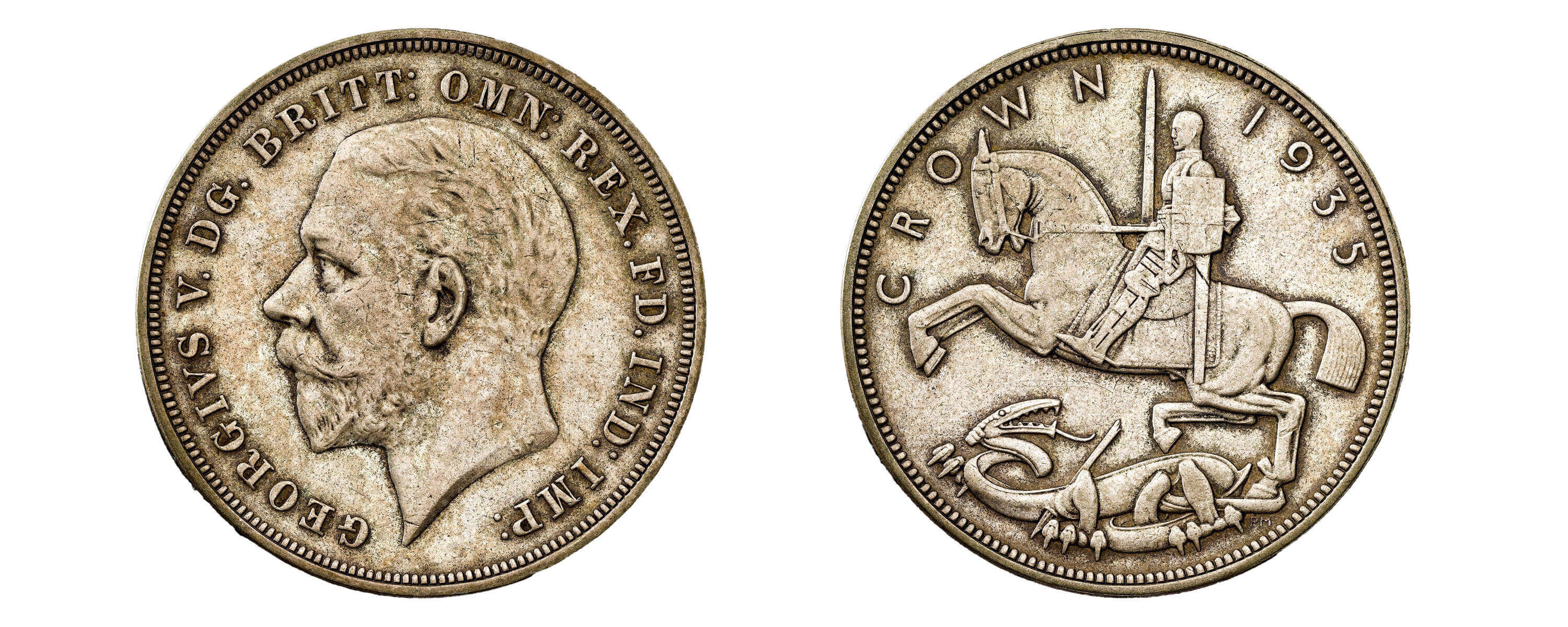
George V crown (RMM1877)
Bronze coinage
The bronze coin designs remained the same throughout the reign, but the head of the king was reduced in size in 1928 in order to help address the problem of ghosting. This is where a ‘ghost’ image of the obverse could be found on the reverse of the coin, owing in this case to the portrait being so large and proud that it displaced too great an amount of material during the strike.
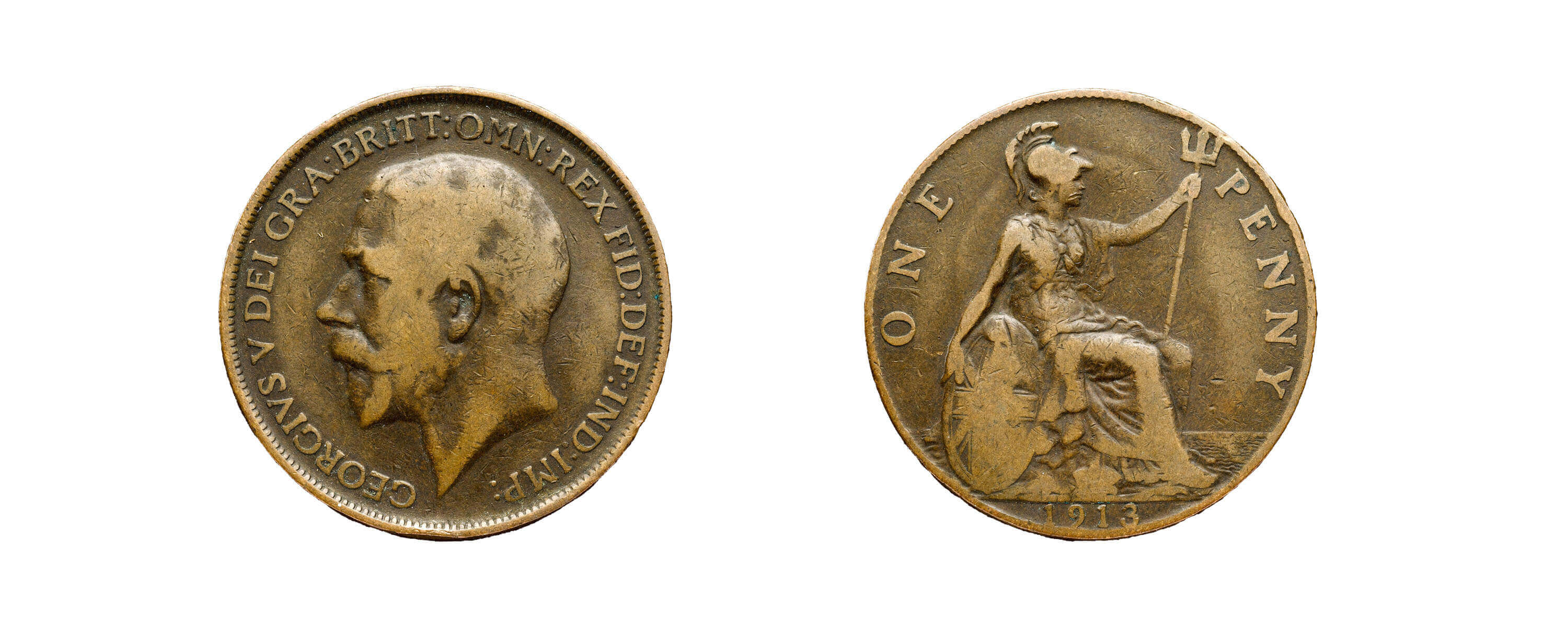
George V penny (RMM8102)
Substantial contracts were granted to the King’s Norton and Heaton Mint and in 1912, 1918 and 1919 pennies were struck at one or the other of these mints with the distinctive KN and H mintmarks.
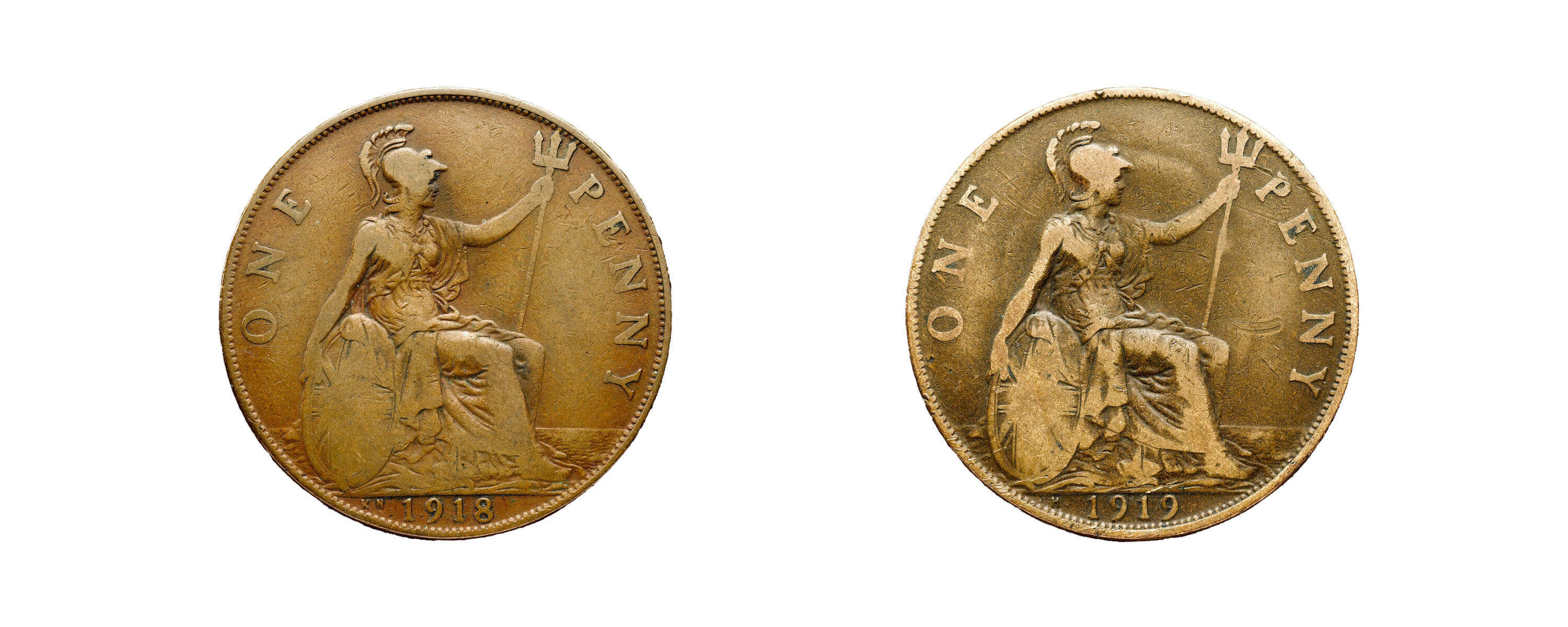
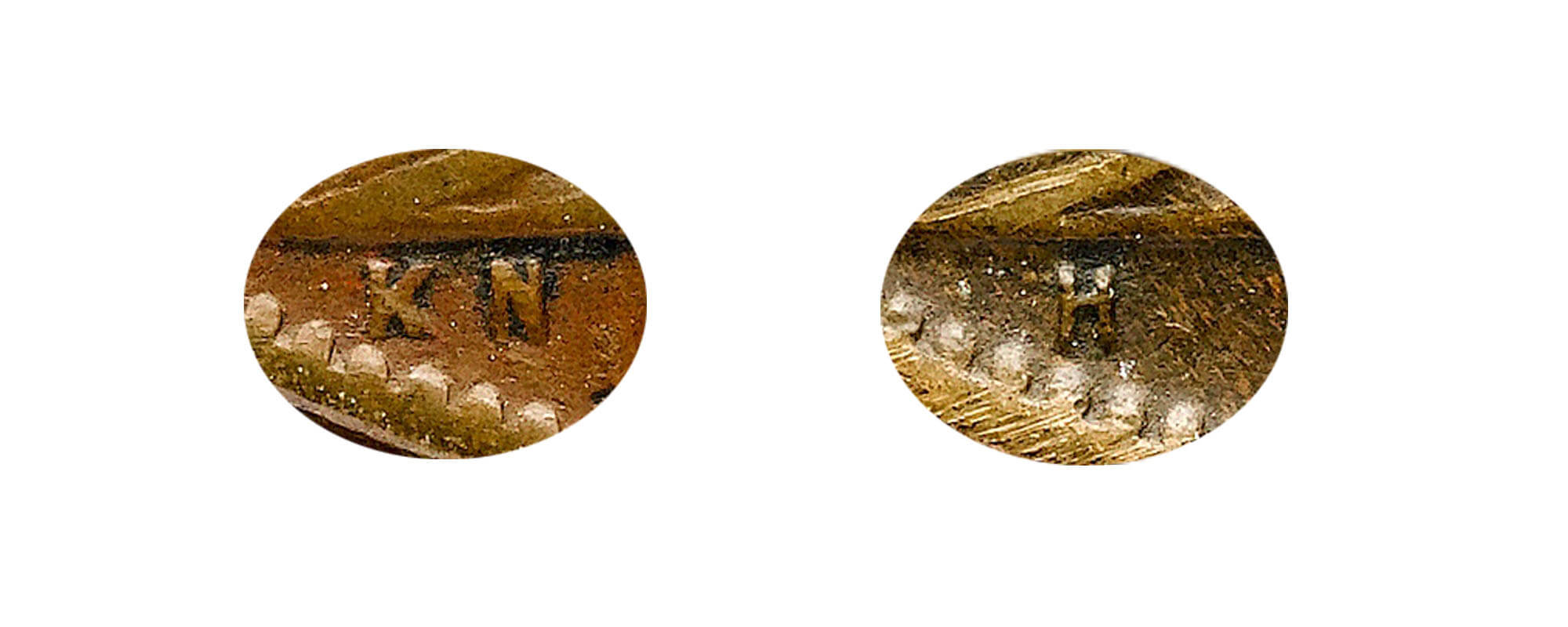
George V pennies (RMM2200 and RMM2203)
The reign also witnesses the striking of the one of the great rarities of the modern British coinage. In 1933 the banks possessed such large stocks of pennies that it was not necessary to strike any more for general circulation. But there was a convention at the time that complete sets of coins of the current year were buried under the foundation stones of new buildings. Consequently three 1933 pennies were struck for buildings erected in that year, along with a small number to be kept as record copies by the British Museum and the Royal Mint Museum. Decades later in the 1970s, the theft of one of the sets and subsequent sale of another, combined with very low rare mintage of the coin, would lead to a national frenzy of change-checking for the slim possibility that a genuinely rare coin might have made its way into circulating change.
Designers and Engravers
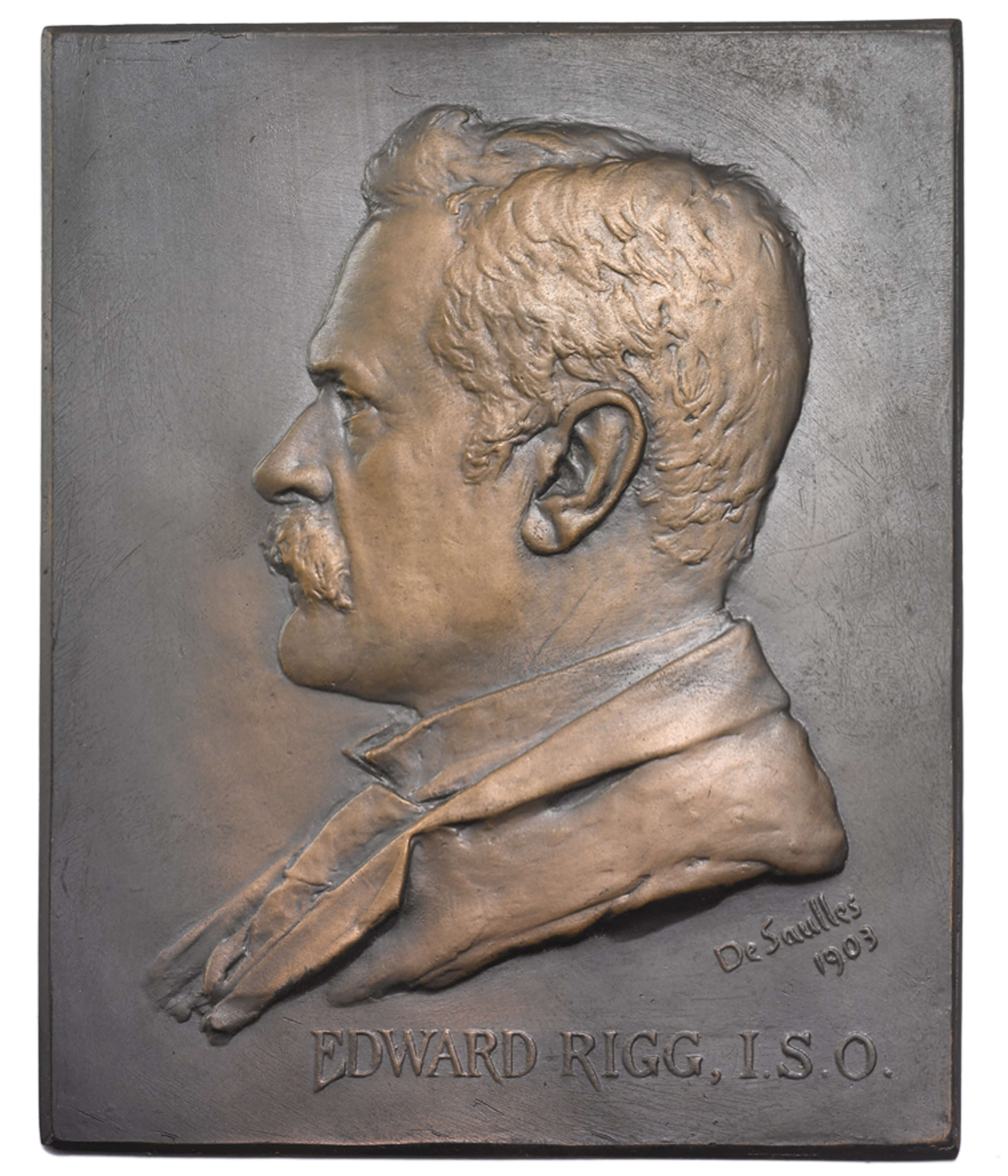
Bronze plaque of Edward Rigg, Superintendent of the Operative Department of the Royal Mint from 1898 to 1918, by George William De Saulles
The talented George William De Saulles who had worked for the Mint from 1893 up to his death in 1903 had not been replaced, and there was a huge skill gap as a result. After this time there were five journeymen engravers at the Mint but none of them were deserving of the title. The death of De Saulles meant that a greater emphasis was placed on the reducing machine - the technology leading to the belief that a designer and engraver in one man was not required. The Mint from here on in would therefore obtain designs from the best artists available and rely on the reducing machine to create the dies. This was not ideal and led to problems as exhibited by the portrait of George V which is the work of the Australian artist Bertram Mackennal. Whilst being an attractive portrait in many ways, it was technically unsuited to use on the coinage creating issues with ghosting and was a millstone around the Mint’s neck for a generation.
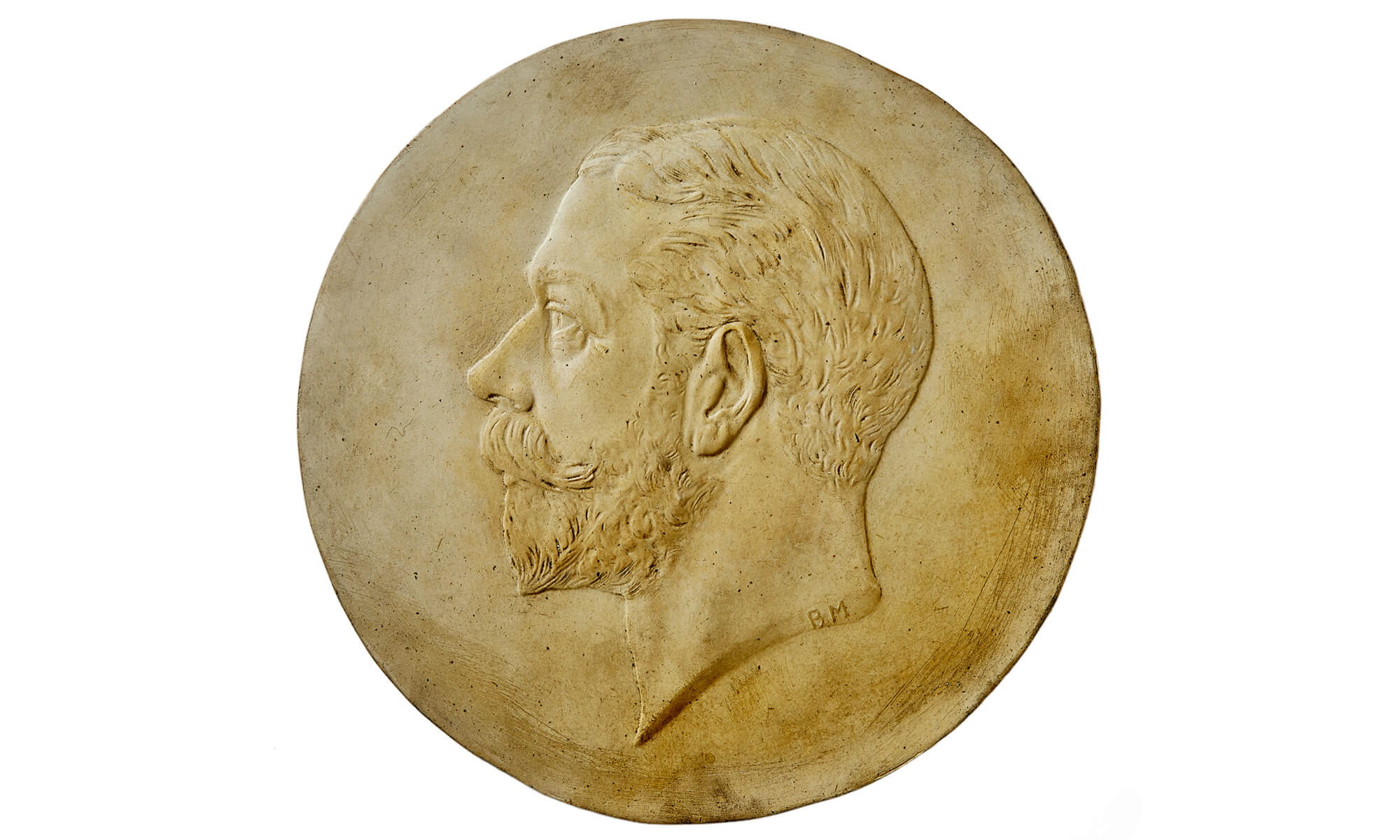
Bertram Mackennal's plaster model of King George V
The appointment of Robert Johnson as Deputy Master in the 1920s helped to reinvigorate a flagging organisation. Johnson took an active interest in good design and cared about the quality of the coinage. He saw it as his duty to raise the level of numismatic art from the depths to which it had sunk since the death of De Saulles. He played a pivotal role in the early years of the Advisory Committee and encouraged the development of promising artists, amongst them George Kruger Gray, Humphrey Paget, Percy Metcalfe, William McMillian and Langford Jones. The new design introduced in 1927 helped to banish the dark days of the First World War and put the Mint back on a more positive track.
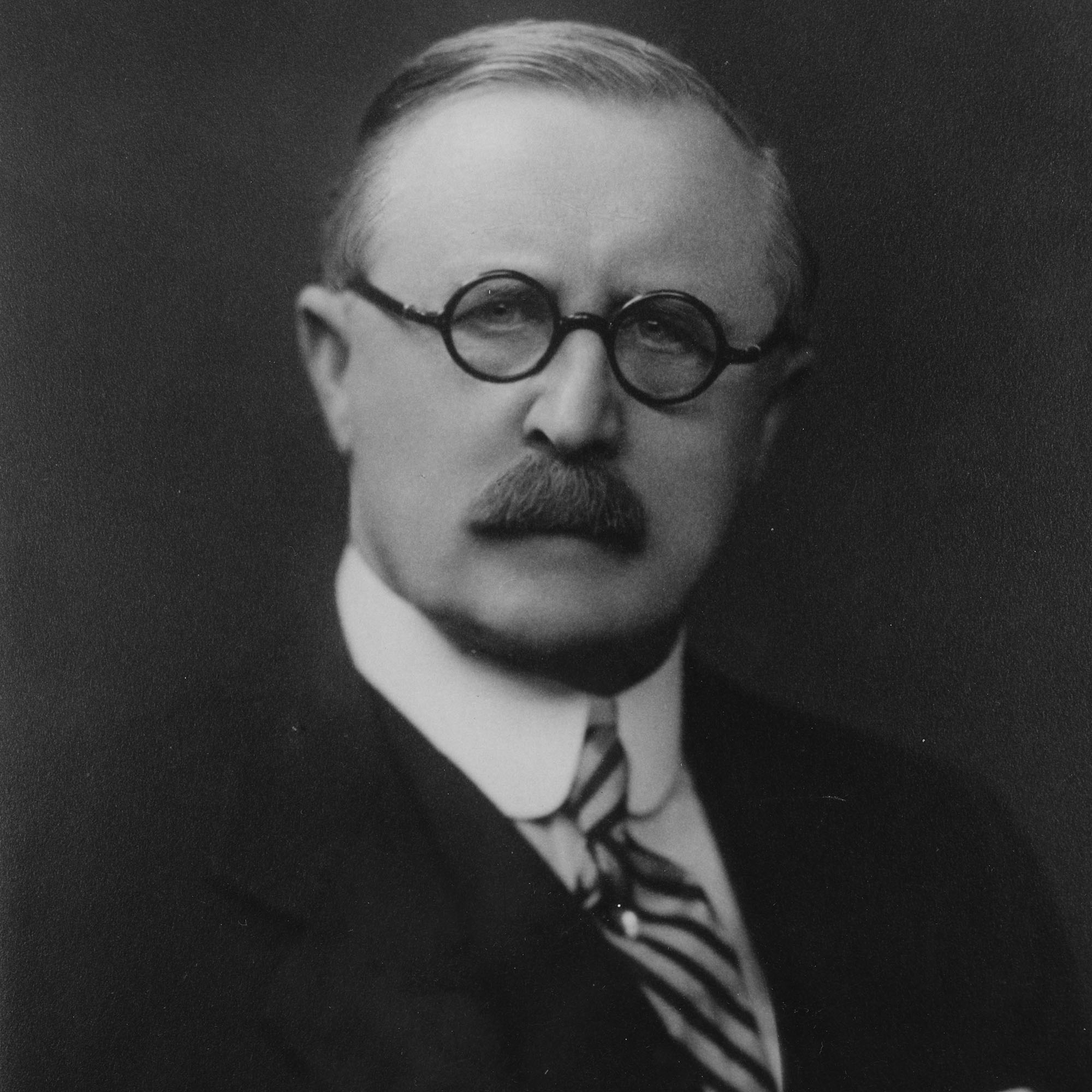
Robert Johnson, Deputy Master of the Royal Mint from 1922 to 1938